

Archived article · Original source date: 2024-08-14
This article is preserved from the previous Solana Bulls site as a historical archive. It reflects its original context; references to products, people, market conditions, eligibility, or rules may no longer be current.
The lack of access to formal banking services affects millions worldwide, stifling economic growth and exacerbating poverty.
It's estimated that a staggering 1.7 billion adults remain unbanked or underserved, highlighting the pressing need for innovative solutions to bridge this financial divide.
Understanding Global Financial Exclusion
Defining Financial Exclusion: Statistics and Global Trends
Financial exclusion, also known as financial underclusion or unbanking, refers to a state where individuals or groups lack access to essential financial services such as banking, credit, and other forms of financial transactions.
According to the World Bank, approximately 1.7 billion adults worldwide are unbanked, with the majority residing in developing countries. In addition, women and low-income populations are disproportionately affected by financial exclusion.
For instance, in Africa, only about 33% of women have a bank account compared to around 45% for men. This significant disparity highlights the need for innovative solutions like blockchain technology to promote global financial inclusion.
The Current State of Financial Inclusion Initiatives Worldwide
Despite significant efforts to promote financial inclusion, a substantial portion of the global population remains unbanked or underbanked. According to the World Bank, in 2020, approximately 1.7 billion adults worldwide lacked access to formal financial services.
This gap is particularly pronounced in developing economies, where traditional banking systems often struggle to reach rural or marginalized communities. For instance, in Sub-Saharan Africa, only about 40% of the adult population has a bank account.
Various initiatives, such as mobile money and digital wallets, have emerged to bridge this divide. However, these solutions often face limitations, including high fees, limited scalability, and security concerns.
Regional Disparities in Access to Banking Services
The lack of access to banking services is not evenly distributed across the globe. In some regions, such as North America and parts of Europe, financial inclusion is relatively high, with a large majority of the population having access to traditional banking services.
However, in other areas, including many countries in Africa, Asia, and Latin America, the situation is vastly different. For instance, in sub-Saharan Africa, an estimated 100 million people live more than 5 kilometers away from their nearest bank branch or agent.
This disparity is further exacerbated by the fact that these regions often have limited mobile network coverage, making it even harder for individuals to access financial services.
Solana's Role in Fostering Financial Inclusion through Blockchain Technology
Seamless Transactions through Solana's Ecosystem
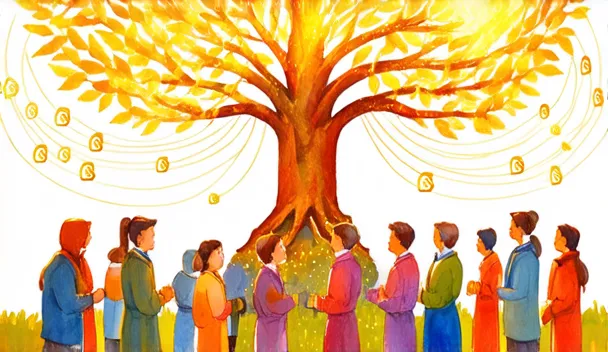
Solana's blockchain technology plays a pivotal role in facilitating seamless transactions, thereby promoting financial inclusion.
By leveraging its fast and low-cost ecosystem, users can execute transactions with ease, regardless of their geographical location or socio-economic background.
Imagine being able to send money across borders as easily as sending an email - this is what Solana enables through its decentralized platform.
With transaction times averaging around 400 milliseconds and a block time of just 1.5 seconds, Solana outpaces traditional payment systems, making it an attractive option for individuals and businesses seeking efficient financial transactions.
A New Paradigm for Financial Services: Blockchain-Based Solutions
Blockchain technology is revolutionizing the financial services landscape by offering a decentralized, secure, and transparent alternative to traditional systems.
By leveraging blockchain's inherent features, Solana promotes financial inclusion by providing a new paradigm for financial services. This innovative approach enables the creation of decentralized applications (dApps) that facilitate peer-to-peer transactions, eliminating the need for intermediaries and reducing transaction costs.
Furthermore, blockchain-based solutions ensure data integrity, tamper-proofing, and censorship resistance, making it an attractive option for underserved populations.
For instance, blockchain-powered microfinance platforms can provide small loans to individuals in developing countries, fostering financial inclusion and economic growth.
Empowering Underserved Communities with Access to Decentralized Finance (DeFi)
Solana's blockchain technology plays a vital role in promoting financial inclusion by providing underserved communities with access to decentralized finance (DeFi).
DeFi applications, built on Solana's scalable and secure platform, offer alternative financial services that are more affordable, transparent, and accessible than traditional banking systems.
For instance, DeFi lending protocols can provide microloans to individuals in developing countries, bypassing the need for intermediaries and reducing transaction costs. Similarly, DeFi insurance platforms can offer protection against economic shocks, such as crop failures or natural disasters, to vulnerable communities.
By empowering these communities with access to DeFi, Solana's blockchain technology helps bridge the financial inclusion gap and creates new opportunities for economic growth and development.
Key Features of Solana Enabling Accessibility and Affordability

Secure and Scalable Blockchain Architecture
Solana's blockchain architecture is designed to provide a secure and scalable foundation for financial inclusion. Solana combines proof-of-stake validators and Tower BFT consensus with Proof of History as a verifiable clock for ordering events.
This approach can be likened to upgrading from a single-lane highway to a multi-lane highway, where more traffic can flow smoothly and efficiently. With its ability to process high transaction throughput under suitable workloads, Solana's architecture supports high-performance applications.
Such applications include decentralized finance (DeFi) platforms and non-fungible token (NFT) marketplaces, making it an attractive solution for promoting financial inclusion.
Decentralized Lending and Microfinance Applications
Solana's blockchain technology enables decentralized lending and microfinance applications, bridging the gap between traditional financial institutions and underserved communities. By leveraging smart contracts and cryptocurrencies, Solana facilitates peer-to-peer transactions, eliminating intermediaries and reducing transaction costs.
This allows individuals to access credit facilities without relying on conventional banking systems. Microfinance platforms built on Solana can provide small loans to entrepreneurs in developing countries, promoting economic growth and financial inclusion.
For instance, a farmer in a rural area can obtain a microloan to purchase seeds or equipment, enabling them to increase crop yields and improve their livelihood.
Low-Cost Transaction Capabilities for Increased Accessibility
Solana's low-cost transaction capabilities play a significant role in promoting financial inclusion. By minimizing the costs associated with processing transactions, Solana enables users to participate in the digital economy without being burdened by hefty fees.
This feature is particularly beneficial for microtransactions and everyday use cases where small amounts are exchanged. For instance, imagine buying a song from an artist directly - on most blockchain networks, the transaction fee would eat into the artist's earnings.
However, Solana's low-cost capabilities ensure that such transactions can be processed efficiently, making it more feasible for individuals to engage in digital commerce without worrying about exorbitant costs.
Breaking Down Barriers: Solana-Powered Solutions for Underserved Communities
Microfinance Solutions through Decentralized Lending
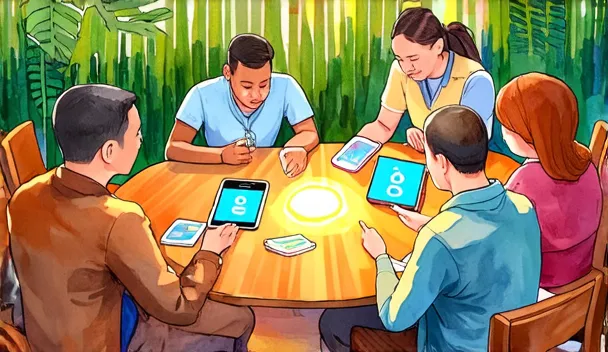
Decentralized lending on Solana enables underserved communities to access microfinance solutions, bridging the gap between traditional banking and financial exclusion. By leveraging decentralized finance (DeFi) protocols, individuals can lend and borrow assets without intermediaries, promoting peer-to-peer transactions that are secure, transparent, and efficient.
This model eliminates the need for collateral, reducing barriers to entry and enabling underserved communities to participate in the global economy.
For instance, a small business owner in a rural area can access microloans through Solana-powered lending platforms, allowing them to fund operations and grow their business without relying on traditional banking systems.
Blockchain-Based Financial Education for Underserved Communities
One of the primary barriers to financial inclusion is a lack of understanding about personal finance and money management.
Solana-powered solutions aim to bridge this knowledge gap by providing blockchain-based financial education tailored to underserved communities. By leveraging decentralized technologies, these initiatives can reach a broader audience, offering accessible and affordable resources for individuals who may not have had access to traditional financial literacy programs.
For instance, mobile apps and online platforms can be designed to educate users about cryptocurrency, wallet management, and smart investing through interactive modules and gamification elements. This approach can help empower underserved communities with the knowledge and skills necessary to navigate the rapidly evolving world of digital finance.
Extending Banking Services to Marginalized Populations
For decades, marginalized communities have been excluded from traditional banking services due to stringent requirements and high fees.
Solana-powered solutions are changing this narrative by providing affordable, accessible, and secure financial services. For instance, blockchain-based lending platforms can offer microloans with lower interest rates and minimal paperwork, allowing low-income individuals to access capital for entrepreneurial ventures or personal emergencies.
Moreover, decentralized payment systems enable seamless cross-border transactions without exorbitant fees, facilitating global remittances and economic participation.
By breaking down these barriers, Solana empowers underserved populations to participate in the global economy, fostering financial inclusion and reducing poverty.
Benefits of Leveraging Solana for Financial Inclusion Initiatives

Increased Accessibility and Affordability of Financial Services through Solana
Solana's blockchain technology enables the creation of decentralized financial systems that are more accessible and affordable for underserved populations. By eliminating intermediaries and reducing transaction costs, Solana makes it possible for individuals to participate in the global economy without being tied to traditional banking systems.
This is particularly beneficial for those living in rural or underbanked areas where access to financial services is limited. For instance, Solana's fast and low-cost transactions enable microfinance initiatives to reach more people, providing them with essential financial tools such as savings accounts, loans, and insurance products.
Improved Security and Transparency in Financial Transactions
The Solana blockchain offers a secure and transparent platform for financial transactions, reducing the risk of fraud and errors. By leveraging Solana's decentralized architecture, financial inclusion initiatives can ensure that all transactions are recorded on an immutable ledger, providing a tamper-evident record of every transaction.
This level of transparency is particularly important in developing economies where mistrust in traditional financial systems is high. For instance, in countries with limited access to banking services, Solana-based platforms can enable secure and transparent microtransactions, empowering individuals to participate in the global economy.
Moreover, Solana's smart contract functionality allows for automated execution of transactions, further reducing the risk of human error or manipulation.
Enhanced Economic Opportunities for Underserved Communities
Leveraging Solana for financial inclusion initiatives can bring about unprecedented economic opportunities for underserved communities.
By providing access to low-cost, fast, and secure transactions, Solana enables these communities to participate in the global economy.
For instance, migrant workers can use Solana-based platforms to send remittances back home without facing exorbitant fees, thus preserving more of their hard-earned income.
Similarly, small-scale entrepreneurs in developing regions can utilize Solana's decentralized finance (DeFi) tools to access capital and expand their businesses, ultimately contributing to local economic growth.
Addressing Challenges and Navigating Regulatory Frameworks

Navigating Regulatory Frameworks for Blockchain Adoption
As Solana promotes financial inclusion, navigating regulatory frameworks becomes a crucial aspect. The blockchain ecosystem operates in a largely uncharted territory, often requiring innovative and adaptive approaches to existing laws and regulations.
Governments worldwide are beginning to recognize the potential of blockchain technology, leading to the development of new regulatory frameworks. However, this process is complex and time-consuming.
Solana's success relies on its ability to collaborate with regulatory bodies, fostering an environment that promotes innovation while ensuring compliance. For instance, the EU's Blockchain Strategy emphasizes the importance of creating a pan-European framework for blockchain, highlighting the need for cooperation between governments, industry leaders, and innovators like Solana.
Addressing Scalability, Security, and Adoption Challenges
Proof of History orders events; validators execute transactions, verify state transitions, and vote on forks through proof-of-stake consensus and Tower BFT.
Furthermore, Solana's focus on security is evident in its use of a decentralized data structure, making it more resilient against potential attacks.
To promote adoption, Solana encourages developers to build scalable applications through its open-source framework and provides tools for seamless integration with existing systems.
Driving Partnerships with Local Institutions for Increased Adoption
One of the most significant challenges in promoting financial inclusion through blockchain technology is navigating regulatory frameworks.
Solana addresses this challenge by driving partnerships with local institutions, such as banks and microfinance organizations. By collaborating with these institutions, Solana can increase adoption and improve access to financial services for underserved populations.
For instance, Solana's partnership with the Bank of Ghana enables the bank to utilize blockchain technology for more efficient payment systems, thereby expanding financial inclusion in the country.
Similarly, Solana's collaboration with microfinance institutions allows them to leverage blockchain-based lending platforms, providing more affordable and accessible credit options for individuals and small businesses.
Conclusion
In conclusion, Solana's innovative approach to blockchain technology has the potential to significantly promote financial inclusion globally. By understanding the current state of financial exclusion and leveraging Solana's ecosystem, we can empower underserved communities with access to decentralized finance (DeFi).
The key features of Solana, including secure and scalable architecture, low-cost transaction capabilities, and decentralized lending applications, enable accessibility and affordability for marginalized populations.
Through blockchain-based solutions, Solana-powered initiatives can break down barriers and extend banking services to those who need them most. As we navigate regulatory frameworks and address scalability challenges, the benefits of leveraging Solana for financial inclusion initiatives are undeniable - increased accessibility, improved security, and enhanced economic opportunities for all.