

Archived article · Original source date: 2024-08-25
This article is preserved from the previous Solana Bulls site as a historical archive. It reflects its original context; references to products, people, market conditions, eligibility, or rules may no longer be current.
Editorial note: This article is educational and is not financial, investment, legal, or tax advice. Products, protocols, yields, fees, liquidity, regulations, and tax treatment can change; verify current primary sources and evaluate the specific risks before acting.
As the cryptocurrency landscape continues to evolve, Solana has emerged as a promising contender in this space, boasting an innovative blockchain architecture designed to enhance stability, security, scalability, and utility.
This article delves into the foundational aspects of stores of value in cryptocurrency, examines Solana's architectural strengths, and assesses its ecosystem growth and adoption. By exploring Solana's unique characteristics and comparative positioning among other cryptocurrencies, we aim to provide a comprehensive analysis of its potential as a reliable store of value.
Understanding Stores of Value in Cryptocurrency: A Foundational Overview
Traditional Stores of Value: A Historical Context
The concept of a store of value has been integral to human societies since ancient times, with various assets serving as mediums of exchange and wealth preservation.
Throughout history, people have turned to commodities such as gold, silver, and precious gems due to their rarity, durability, and aesthetic appeal.
These traditional stores of value were not only used in everyday transactions but also played a significant role in safeguarding purchasing power against inflation and economic downturns.
Cryptocurrency's Unique Approach to Store of Value: An Evolutionary Perspective
Cryptocurrencies have introduced a novel approach to storing value, diverging from traditional assets like gold and fiat currencies. This new paradigm is rooted in blockchain technology, which enables decentralized networks to secure, verify, and facilitate transactions without the need for intermediaries.
Unlike physical stores of value that rely on centralized control or geographical constraints, cryptocurrencies exist solely in digital form, making them highly portable and accessible globally.
Furthermore, their value proposition extends beyond mere store of value; many cryptocurrencies, such as Solana, are designed to support a wide range of applications and use cases, from decentralized finance (DeFi) and non-fungible tokens (NFTs) to gaming and social platforms.
This multifaceted nature positions them not just as stores of value but also as the backbone for an evolving digital economy.
Historical Examples and Lessons for Cryptocurrencies
The pursuit of a reliable store of value in cryptocurrency is not new, with various assets having emerged over the years claiming to offer stability and security. Bitcoin, often referred to as "digital gold," has been a benchmark due to its decentralized nature, capped supply, and robust security measures.
However, its price volatility has led some investors to seek alternatives that can better withstand market fluctuations. Other cryptocurrencies like Ethereum have also experienced significant growth but face challenges related to scalability and transaction costs.
These historical examples underscore the importance of a blockchain architecture that balances stability, security, scalability, and utility. Proof of History orders events; validators execute transactions, verify state transitions, and vote on forks through proof-of-stake consensus and Tower BFT.
Core Characteristics of a Reliable Store of Value: Stability, Security, Scalability, and Utility

Solana's Differentiators: What Sets It Apart in the Market
Solana stands out in the cryptocurrency market due to its unique combination of stability, security, scalability, and utility.
This innovative approach has attracted various projects and companies that are leveraging Solana's blockchain efficiency to provide a wide range of applications and use cases.
Security Measures and Safeguards for User Investments
Solana's commitment to security is evident in its robust architecture, designed to safeguard user investments through various measures.
One critical aspect is the implementation of advanced cryptographic techniques, ensuring that transactions are not only fast but also highly secure.
This ensures that all transactions are accurately ordered and verified on the blockchain, preventing potential security threats such as double-spending attacks.
Scalability Solutions for a Thriving Ecosystem
Solana's commitment to scalability is evident in its innovative blockchain architecture, which has attracted a plethora of projects and platforms designed to further enhance the ecosystem's efficiency and growth.
For instance, Kamino Finance offers a streamlined management system for concentrated liquidity market maker (CLMM) positions, making it easier for users to participate in the Solana DeFi space while maximizing returns.
Meanwhile, Jito's validator client and liquid staking token are engineered to optimize blockchain efficiency and promote decentralization, ensuring that the network operates smoothly and securely.
Solana's Architectural Strengths: Enhancing Stability and Security through Blockchain Technology

The Key to Stability: Solana's Blockchain Architecture
Solana's blockchain architecture plays a pivotal role in its potential as a reliable store of value.
At its core, Solana's innovative approach to stability is rooted in its Proof of History (PoH) ordering clock.
Enhancing Security through Advanced Technology
Solana's robust security measures are underpinned by its innovative blockchain architecture, which incorporates advanced cryptographic techniques to safeguard user investments.
This not only prevents potential security threats such as double-spending attacks but also enhances the overall security posture of the Solana ecosystem.
Efficient Transactions: The Backbone of Reliability
Efficient transactions are the backbone of reliability in cryptocurrency, enabling users to conduct trades with confidence while minimizing the risk of fraud or network congestion.
Solana's commitment to efficiency is evident in its ability to process thousands of transactions per second at a cost significantly lower than many of its peers.
This scalability and affordability make it an ideal platform for both individual investors seeking to safeguard their wealth and businesses looking to integrate cryptocurrency into their operations.
Assessing Solana's Ecosystem Growth and Adoption: A Catalyst for Reliability

Mainstream Adoption and Its Drivers
The mainstream adoption of Solana is a critical factor in its potential as a reliable store of value. As more projects, businesses, and individuals begin to utilize the Solana blockchain for various purposes, it not only enhances the ecosystem's growth but also contributes to its reliability.
Mainstream adoption is driven by several key factors, including the scalability and efficiency of the Solana network, innovative applications built on top of the platform, and a growing community of developers and users. For instance, projects like Kamino Finance are introducing new ways for users to manage liquidity positions efficiently, while Jito's validator client and liquid staking token aim to optimize blockchain efficiency and promote decentralization.
These advancements not only attract more participants but also demonstrate Solana's potential for real-world applications beyond mere speculation.
dApps, Smart Contracts, and Their Role in Enhancing Utility
The proliferation of decentralized applications (dApps) and smart contracts on Solana has significantly contributed to its growing utility. dApps such as Kamino Finance, with its streamlined management system for concentrated liquidity market maker (CLMM) positions, and Jito's validator client and liquid staking token, are enhancing the overall efficiency of the Solana ecosystem.
These applications not only simplify complex DeFi strategies but also introduce a new level of capital efficiency and earnings potential for users. Furthermore, platforms like Shadow Drive and Phantom are pushing the boundaries of what is possible on Solana, offering high-performance decentralized object storage and seamless wallet experiences respectively.
The integration of smart contracts with these dApps enables automated execution of various tasks, such as auto-compounding fees and rewards for liquidity providers, thereby increasing the utility of the Solana blockchain.
Ecosystem Growth as a Catalyst for Increased Reliability and Value
The growth of Solana's ecosystem serves as a significant catalyst for its potential as a reliable store of value. This growth is underscored by the increasing adoption of Solana across various projects and platforms, each contributing to the diversification and resilience of the network.
For instance, Kamino Finance has introduced a platform designed to streamline liquidity provision within the Solana DeFi space, offering a more efficient way for users to manage their CLMM positions. Similarly, Jito's validator client and liquid staking token have optimized blockchain efficiency and promoted decentralization, securing and stabilizing the network further.
This expanding ecosystem not only enhances the utility of Solana but also fosters an environment where reliability and value can flourish, drawing more developers, investors, and users into the fold.
Navigating Risks and Volatility: Mitigating Concerns to Ensure Long-Term Reliability

Volatility Management: Strategies to Address Market Price Fluctuations
Volatile market price fluctuations are a common challenge facing investors in the cryptocurrency space. Solana, like other digital assets, is not immune to such fluctuations.
However, several strategies can be employed to mitigate risks and ensure long-term reliability. One key approach involves diversifying investments across various asset classes within the Solana ecosystem.
This could include allocating funds into decentralized applications (dApps) offering different types of yields or investing in projects with unique value propositions like Kamino Finance's CLMM positions management system.
By spreading risk, investors can potentially offset losses from one investment with gains from another, thereby reducing overall portfolio volatility.
Smart Contract Risks: Understanding and Mitigation Techniques
Solana's reliance on smart contracts to facilitate various transactions and interactions introduces a unique set of risks. One primary concern is the potential for bugs or vulnerabilities within these contracts, which could lead to unintended behavior or even security breaches.
To mitigate such risks, developers must prioritize rigorous testing and auditing processes to ensure that their contracts are robust and secure.
Centralization Concerns: Ensuring Decentralized Long-Term Reliability
One of the critical challenges in ensuring long-term reliability in blockchain technology is mitigating centralization concerns.
A decentralized network is essential for maintaining security, stability, and resilience against potential threats or manipulation attempts.
Solana's architectural design prioritizes decentralization through various measures, including its Proof of History (PoH) ordering clock and a growing ecosystem of validators and applications.
This subsection examines how Solana addresses centralization concerns to ensure decentralized long-term reliability.
Comparative Analysis: Positioning Solana Among Other Cryptocurrencies as a Reliable Store of Value
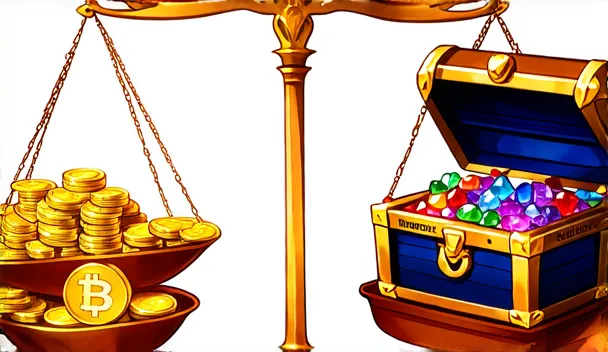
Solana vs. Bitcoin: A Comparative Analysis of Store of Value Potential
When it comes to assessing a reliable store of value in the cryptocurrency market, comparisons between Solana and Bitcoin are inevitable. Both assets have been touted as potential stores of value due to their unique characteristics and adoption within the digital economy.
However, their approaches to stability, security, scalability, and utility differ significantly.
By examining the core characteristics that define a reliable store of value, such as stability, security, scalability, and utility, this comparative analysis aims to provide insights into why Solana is gaining traction as a dependable store of value.
Evaluating Solana's Utility in the Broader Cryptocurrency Landscape
Solana's utility extends far beyond its role as a reliable store of value, positioning it as a pivotal player in the broader cryptocurrency landscape.
A key aspect of this utility is its ability to support a wide range of applications and use cases, from decentralized finance (DeFi) and non-fungible tokens (NFTs) to gaming and social platforms.
This multifaceted nature not only diversifies Solana's appeal but also underscores its potential for real-world applications beyond mere speculation.
Moreover, Solana's innovative blockchain architecture has attracted various projects designed to further enhance the ecosystem's efficiency and growth.
For instance, Kamino Finance offers a streamlined management system for concentrated liquidity market maker (CLMM) positions, making it easier for users to participate in the Solana DeFi space while maximizing returns.
Meanwhile, Jito's validator client and liquid staking token are engineered to optimize blockchain efficiency and promote decentralization, ensuring that the network operates smoothly and securely.
Furthermore, platforms like Shadow Drive and Phantom are pushing the boundaries of what is possible on Solana, offering high-performance decentralized object storage and seamless wallet experiences respectively.
The integration of smart contracts with these applications enables automated execution of various tasks, such as auto-compounding fees and rewards for liquidity providers, thereby increasing the utility of the Solana blockchain.
How Solana Measures Up to Ethereum and Other Key Players
When comparing Solana's potential as a reliable store of value, it is essential to position it alongside other key players in the market. Ethereum, often considered a benchmark for decentralized applications (dApps) and smart contracts, offers valuable insights into how Solana measures up.
While Ethereum boasts a robust security posture and widespread adoption, its scalability issues and high transaction costs are significant drawbacks.
Conclusion
In this exploration of Solana's potential as a reliable store of value, we've examined the foundational characteristics that underpin such reliability in cryptocurrency. By analyzing Solana's architectural strengths, ecosystem growth, and comparative positioning among other cryptocurrencies, it becomes evident that Solana possesses a unique combination of stability, security, scalability, and utility.
While acknowledging and mitigating risks associated with volatility and smart contract vulnerabilities is crucial, the evidence suggests that Solana's design and growing adoption rate position it favorably as a reliable store of value.
As the cryptocurrency landscape continues to evolve, Solana's commitment to enhancing its technology and expanding its ecosystem offers a compelling narrative for those seeking a dependable digital asset. With careful consideration and strategic investment, Solana could indeed emerge as a stalwart in the realm of cryptocurrency stores of value.