
Archived article · Original source date: 2024-08-14
This article is preserved from the previous Solana Bulls site as a historical archive. It reflects its original context; references to products, people, market conditions, eligibility, or rules may no longer be current.
Editorial note: This article is educational and is not financial, investment, legal, or tax advice. Products, protocols, yields, fees, liquidity, regulations, and tax treatment can change; verify current primary sources and evaluate the specific risks before acting.
Blockchain technology has given rise to a multitude of innovative applications, and one such concept that has been gaining attention is Solana native programs.
These programs play a vital role in the Solana ecosystem, enabling developers to build scalable, secure, and efficient decentralized applications.
As we delve into the world of Solana, it becomes clear that native programs are more than just smart contracts - they represent a fundamental building block of the blockchain itself.
Defining Solana Native Programs: Purpose and Functionality
Native Program Definition and Purpose
A Solana native program is a self-contained, on-chain application that executes logic directly on the blockchain. Unlike smart contracts, which are essentially programs executed by nodes on the network, native programs run natively on the Solana blockchain, leveraging its performance capabilities and scalability features.
Think of a native program as a specialized, optimized function that's woven into the fabric of the blockchain itself - much like how an operating system has built-in utilities for tasks like file management or networking.
Key Differences Between Native Programs and Smart Contracts
Native programs on Solana differ significantly from traditional smart contracts found in other blockchain ecosystems. While both enable developers to create decentralized applications, native programs are more akin to a compiled library than a script.
Unlike smart contracts, which are typically written in high-level languages and executed by a virtual machine (EVM), native programs are built using low-level programming languages like Rust or C++, allowing for direct interaction with the blockchain's base layer.
This fundamental difference enables Solana native programs to achieve higher performance, security, and scalability compared to smart contract-based solutions.
Role in the Solana Ecosystem
Solana Native Programs play a vital role in the Solana ecosystem by serving as building blocks for decentralized applications (dApps). They enable developers to create custom, on-chain logic that can be executed efficiently and securely.
Think of Solana Native Programs like LEGO bricks - each one has a specific function, but when combined, they can form complex structures with unique capabilities. In the context of Solana, these programs interact with the blockchain's state and execute user-defined instructions, allowing for the creation of innovative dApps that cater to various use cases.
Such use cases include decentralized finance (DeFi), non-fungible tokens (NFTs), and gaming, demonstrating the versatility and potential of Solana Native Programs in shaping the future of blockchain applications.
Exploring Built-in Native Programs on the Solana Blockchain*
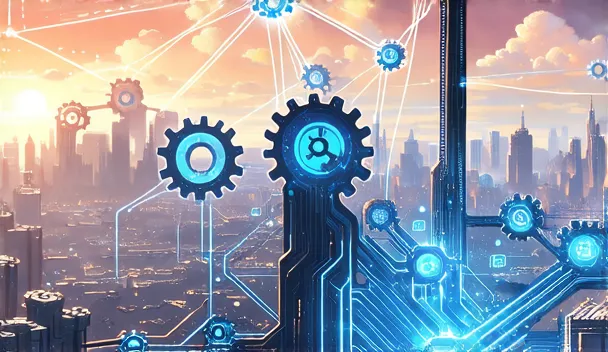
Solana's Architecture: Understanding Native Programs
The Solana blockchain is designed with a unique architecture that enables seamless interaction between its native programs. At its core, Solana's architecture can be thought of as a massive, decentralized computer that processes transactions and executes computations in parallel.
This parallel processing capability allows for faster transaction settlement times and lower fees compared to other blockchains.
Native programs on Solana are akin to "smart contracts" found on Ethereum, but with the key difference being that they are built directly into the blockchain's codebase rather than deployed as third-party applications.
This native integration enables these programs to interact with each other in a more seamless and efficient manner, fostering a robust ecosystem of decentralized applications (dApps) on the Solana network.
Token Program Overview
The Solana blockchain's native programs also feature a token program, which is responsible for managing and executing transactions involving tokens. This built-in program enables developers to create, issue, and transfer SPL (Solana Programmable Lock) tokens without requiring additional third-party smart contracts or external dependencies.
Think of the token program as a digital vending machine that securely handles token exchanges between users on the Solana network. It provides an efficient and trustless way for developers to integrate token-based functionality into their applications, allowing them to focus on building innovative use cases rather than worrying about low-level token management.
Stake Program Functionality on the Solana Blockchain
The stake program is a native program on the Solana blockchain that enables validators to participate in the consensus process.
In essence, it allows validators to "stake" their SOL tokens as collateral to validate transactions and create new blocks.
This program is crucial for maintaining the security and integrity of the Solana network.
Think of staking like renting out a virtual apartment - just as you would pay rent to occupy physical space, validators stake their SOL tokens to occupy a "virtual slot" in the validation process.
By doing so, they help validate transactions and secure the network, earning rewards in the form of additional SOL tokens in return.
The Token Program: Asset Management and Tokenization Fundamentals
Tokenized Assets on Solana: Creation and Transfer
The token program is a fundamental component of Solana native programs, enabling the creation, management, and transfer of tokenized assets.
In essence, tokenization involves representing real-world assets as unique digital tokens on the blockchain. This process allows for efficient, secure, and transparent transactions.
Solana tokens are created and managed through the Token Program or Token-2022. Mint, freeze, metadata, transfer, and extension behavior depend on the selected token program and configured authorities; SPL Governance is optional tooling for project-level DAO governance, not the token standard.
For instance, consider an artist looking to tokenize a rare piece of art. By creating a unique token on Solana, they can transfer ownership and provenance efficiently, eliminating the need for intermediaries.
This tokenization process not only enhances security but also enables seamless transactions between buyers and sellers.
Token Program Use Cases and Implementations
The Solana native program, Token Program, has a multitude of use cases and implementations.
One prominent example is the creation and management of non-fungible tokens (NFTs), which can represent unique digital assets such as art pieces or collectibles. This enables creators to mint, sell, and trade these NFTs on decentralized marketplaces, providing a new paradigm for digital ownership.
Another use case involves tokenizing traditional assets like real estate or commodities, allowing for fractional ownership and increased liquidity.
The Token Program also facilitates the creation of custom tokens for various purposes, such as governance voting or community incentives, showcasing its versatility in asset management and tokenization.
Benefits of Tokenization on Solana
Tokenization on Solana offers several benefits, making it an attractive option for creators and developers. For one, tokenization allows for the creation of unique digital assets that can be efficiently managed and transferred.
This is particularly useful in cases where traditional ownership models are impractical or inefficient, such as with art or collectibles.
Additionally, Solana's low transaction fees and fast processing times make it an ideal platform for high-volume trading and transactions.
For example, a music artist could tokenize their album, allowing fans to purchase and own individual tracks or exclusive content, while also enabling the artist to manage royalties and ownership rights seamlessly.
Stake Program Essentials: Transaction Validation and Network Security
Stake Program Transaction Validation Mechanisms
A stake program's transaction validation mechanisms are crucial in ensuring the integrity and security of Solana Native Programs.
These mechanisms involve a series of checks and verifications that transactions must undergo before being added to the blockchain. Think of it like a rigorous airport security screening process, where each passenger (transaction) is thoroughly inspected for any potential threats or anomalies.
The validation process includes checks on transaction syntax, sender and recipient accounts, and stake amounts. This ensures that only valid transactions are processed, preventing malicious actors from compromising network security.
By leveraging these mechanisms, Solana Native Programs can maintain a robust and trustworthy environment for decentralized applications to thrive.
Validator Roles in Securing the Solana Network
In the Solana ecosystem, validators play a crucial role in securing the network by validating transactions and maintaining the integrity of the blockchain. These nodes are responsible for verifying the legitimacy of transactions, ensuring that they adhere to the rules and protocols established by the Solana network.
In essence, validators act as "gatekeepers" of the network, safeguarding it against malicious actors and incorrect data.
Think of them as quality control specialists in a manufacturing plant - just as these specialists inspect products for defects before allowing them onto the market, Solana validators scrutinize transactions to ensure they are error-free and comply with network standards.
Incentivization Model for Validator Participation
The Solana native programs incorporate an incentivization model to encourage validators to participate in transaction validation and network security. This model is designed to ensure a decentralized and secure network by providing rewards to validators who contribute their computational power and resources.
In essence, it's similar to a "proof-of-stake" (PoS) system, where validators are incentivized with SOL tokens for validating transactions and creating new blocks. The more "stake" (or computational power) a validator has, the higher their chances of being chosen to create a new block and earn rewards.
This model not only promotes participation but also ensures that validators have a vested interest in maintaining the network's integrity.
Additional Core Components: Voting, Time Unfreeze, and More

Voting Mechanisms and Governance
Solana native programs rely on robust voting mechanisms to ensure decentralized governance.
The Solana Foundation, a non-profit organization overseeing the development of Solana, employs a voting system to decide on proposals for upgrading the network, adjusting parameters, or implementing new features.
This process involves validators, who are responsible for securing the network and casting votes using their stake, which is a measure of their invested SPL (Solana's native cryptocurrency) tokens.
The outcome is determined by a weighted voting mechanism, where the influence of each validator is proportional to their stake. For instance, if a proposal requires 67% of validators to agree, it will only pass if at least 67% of the total stake is allocated in favor of the proposed change.
Key Ecosystem Components: Time Unfreeze and More
SPL Governance is an optional on-chain program that individual projects can use for DAO proposals and voting. It does not centrally govern the Solana network, create a universal SOL vote, or provide general execution, wallet, token, bridge, fee, or storage functionality.
One such component is time_unfreeze, which enables users to update their vote timestamps without incurring unnecessary penalties. This functionality ensures that validators can effectively participate in voting processes while minimizing potential drawbacks.
Another crucial element is stake_update, which allows users to update their staked accounts and maintain a healthy balance between reward distribution and penalty avoidance.
These components work in tandem to create a robust and efficient governance system, allowing Solana's native programs to thrive.
Additional Core Programs and Their Functions
While Solana Native Programs are built around the core components of Accounts, Signers, and Validators, there are additional core programs that enhance their functionality. These include Voting, Time Unfreeze, and Governance programs.
The Voting program allows validators to participate in on-chain voting, enabling decentralized decision-making for network upgrades and parameter changes.
Time Unfreeze is a program that enables the freezing and unfreezing of accounts, which helps in preventing certain types of attacks. Additionally, the Governance program facilitates the management of proposals, allowing stakeholders to create and vote on proposals that shape the future of Solana's ecosystem.
Benefits and Real-World Applications of Solana Native Programs
Streamlined Development with Native Integration
Solana native programs offer developers a seamless way to integrate blockchain functionality into their applications. By allowing programs to be written in languages like Rust, C++, and JavaScript, Solana's native integration enables streamlined development processes.
This is analogous to how mobile apps can leverage native APIs on iOS or Android, enabling more efficient and secure interactions with the underlying system.
Similarly, Solana's native programs facilitate direct interaction with the blockchain, eliminating intermediaries and reducing overhead. As a result, developers can build faster, more scalable applications that unlock new use cases and business models.
Enhanced Security through Direct Blockchain Interaction
Solana Native Programs enable direct interaction with the blockchain, eliminating intermediaries and enhancing security.
By running directly on-chain, these programs minimize the attack surface, reducing vulnerabilities associated with off-chain components. This design also facilitates end-to-end encryption and secure data storage, ensuring confidentiality and integrity of sensitive information.
Application voting logic is normally deployed as an on-chain program; it is not thereby a Solana native or built-in program. Neither execution on Solana nor use of a token automatically guarantees tamper-proof results or voter anonymity, which require separate application and cryptographic designs.
Optimized Performance for Critical Use Cases
Solana Native Programs are optimized to deliver high-performance capabilities, making them ideal for critical use cases that require low latency and fast execution. In applications such as DeFi trading platforms or gaming environments, milliseconds matter - a delay can result in significant losses or a poor user experience.
Solana's native programs ensure seamless interactions between smart contracts and external data sources, facilitating efficient and reliable processing of complex transactions.
For example, a high-frequency trading bot can leverage Solana Native Programs to rapidly execute trades based on real-time market data, giving it a competitive edge in the fast-paced world of financial markets.
Conclusion
In this article, we explored the world of Solana native programs, delving into their purpose and functionality within the Solana ecosystem.
We examined built-in native programs on the blockchain, including the token program for asset management and tokenization, and the stake program for transaction validation and network security. Additional core components such as voting mechanisms and time unfreeze were also discussed.
Through this exploration, we've seen how Solana native programs offer streamlined development, enhanced security, and optimized performance for critical use cases.
By understanding these programs, developers can tap into the full potential of the Solana blockchain, creating more efficient and secure applications. As the Solana ecosystem continues to grow, embracing native programs will be crucial for driving innovation and adoption in the world of blockchain technology.