

Archived article · Original source date: 2024-08-17
This article is preserved from the previous Solana Bulls site as a historical archive. It reflects its original context; references to products, people, market conditions, eligibility, or rules may no longer be current.
Solana is addressing this issue with remarkably low transaction fees, catering to the growing demand for seamless and cost-effective experiences.
Solana's Fee Structure: A Technical Overview
How Proof-of-History Reduces Transaction Costs
Solana's blockchain efficiency is enhanced by its Proof-of-History (PoH) ordering clock, which reduces transaction costs without relying on energy-intensive processes.
Unlike traditional models, PoH utilizes a time-stamped hash chain to verify the sequence and timing of events.
Transaction propagation, scheduling, and fee efficiency
The Solana fee structure is designed for efficiency and scalability.
Solana RPC services forward transactions toward current or upcoming leaders, while Turbine distributes block data among validators. These mechanisms are distinct from consensus and from the fee rules that price signatures, compute-unit priority, and local account contention.
This mechanism reduces congestion and enhances overall network performance.
Competitive Advantage in Transaction Fees
Compared to other blockchain platforms like Ethereum, Solana stands out with its low costs.
Proof of History orders events; validators execute transactions, verify state transitions, and vote on forks through proof-of-stake consensus and Tower BFT.
This results in significantly lower fees, making Solana an attractive choice for building scalable decentralized applications.
User Benefits: Accessibility, Cost-Effectiveness, and Seamless Experiences
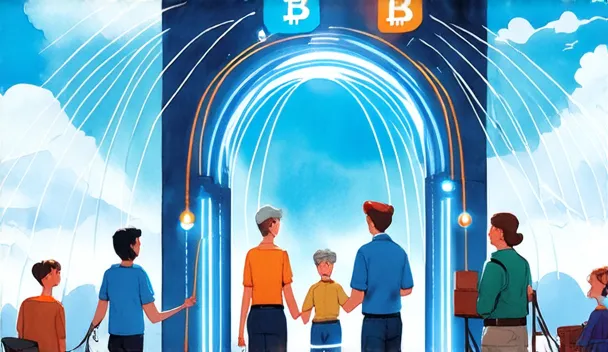
Breaking Down Accessibility Barriers with Low Fees
The Solana blockchain's low transaction fees break down accessibility barriers, democratizing access to decentralized applications and financial services.
With fees as low as a fraction of a cent, users from diverse backgrounds can engage with blockchain technology without being deterred by exorbitant costs.
This affordability factor fosters an inclusive ecosystem where developers, artists, and everyday users can participate on equal footing.
Streamlining Experiences Across Diverse Use Cases
The benefits of low transaction fees extend beyond cost-effectiveness, streamlining experiences across diverse use cases.
In decentralized finance (DeFi), platforms like Kamino Finance and Jito leverage Solana's efficiency to redefine user engagement. Kamino's autonomous vaults simplify liquidity management, offering a seamless experience for users looking to maximize returns without complex interfaces or exorbitant fees.
Similarly, community-centric projects like Bonk foster a sense of shared ownership and community spirit among users.
Developer Benefits: Streamlined Development, Increased Engagement, and New Opportunities

Simplifying Dapp Development and Enhancing User Engagement
Solana's low transaction fees simplify the process of building and maintaining decentralized applications (dApps), fostering an environment conducive to innovative dApp development.
This advantage is particularly evident in complex transactions or high-frequency interactions, where traditional blockchain platforms often struggle to scale due to exorbitant costs.
The Solana blockchain also enhances user engagement by streamlining onboarding processes, especially in the realm of decentralized finance (DeFi).
Platforms like Kamino Finance and Jito leverage Solana's efficiency to redefine user onboarding experiences, offering seamless, cost-effective solutions that lower barriers to entry for new users.
Community-driven projects like Bonk demonstrate how low fees facilitate engagement and user empowerment within the ecosystem.
Unlocking New Monetization Opportunities
Solana's low transaction fees unlock new monetization opportunities for developers, enabling them to build scalable decentralized applications that are more cost-effective and user-friendly.
By reducing costs associated with transaction processing, developers can focus on creating value-added services, increasing their revenue potential.
Projects like Jito's liquid staking token offer new avenues for passive income generation through MEV rewards, incentivizing developers to build within the Solana ecosystem.
Industry Implications: Driving Adoption and Innovation with Low Fees

Incentivizing Mainstream Adoption and Fostering Innovation
Solana's low transaction fees drive mainstream adoption by making decentralized applications (dApps) more accessible and user-friendly. This affordability factor is crucial in fostering an inclusive ecosystem where developers, artists, and everyday users can participate on equal footing.
By minimizing the barriers to entry associated with exorbitant costs, Solana empowers users from diverse backgrounds to engage with blockchain technology without being deterred by financial constraints.
Empowering Creators, Entrepreneurs, and Developers
The low transaction fees have also given rise to new opportunities for creators and entrepreneurs within the blockchain ecosystem.
Platforms like Kamino Finance and Jito are leveraging Solana's efficiency to redefine user engagement and offer cost-effective solutions that cater to a broader audience.
These projects are streamlining liquidity management, staking, and decentralized finance (DeFi) activities, making them more attractive to users from various backgrounds.
Streamlined User Experience and Growing Ecosystem
The integration of Phantom's intuitive wallet experience with Solana's burgeoning DeFi and NFT markets has further streamlined user engagement, allowing for effortless interaction with various dApps and games.
As a result, the Solana blockchain is becoming an attractive choice for developers seeking to build scalable, cost-effective, and user-friendly decentralized applications.
Comparative Analysis: Solana's Transaction Fees vs. Other Blockchain Platforms

The Solana blockchain stands out with its remarkably low transaction fees, significantly lower than leading blockchain platforms like Ethereum.
A single transaction on Solana can be as low as a fraction of a cent, making it an attractive choice for developers and users seeking to build scalable decentralized applications.
Key Factors Contributing to Solana's Low Transaction Costs
Solana's ability to maintain remarkably low transaction costs is attributed to its Proof-of-History (PoH) ordering clock, which eliminates the need for energy-intensive processes typically associated with traditional Proof-of-Work (PoW) or Proof-of-Stake (PoS) models.
This novel approach utilizes time-stamped hash chains to verify transactions, resulting in faster processing times and lower fees.
Transaction forwarding and Turbine block propagation help move data through the network, while parallel scheduling can execute transactions whose writable accounts do not conflict. Neither mechanism guarantees inclusion, finality, or a particular fee.
Balancing Scalability and Security in a Low Fee Ecosystem

The Solana blockchain's low transaction fees have driven widespread adoption across various sectors, making decentralized applications (dApps) more accessible and user-friendly.
Enhancing Security Without Compromising Performance
Solana's commitment to security is evident in its ability to balance stringent security measures with seamless performance through innovative technologies.
Key Considerations for Achieving Optimal Balance
Achieving a balance between scalability and security is crucial, particularly in low-fee ecosystems.
Solana's fee structure combines a per-signature base fee with an optional compute-unit priority fee. Proof of History provides ordering information; transaction forwarding, block propagation, runtime scheduling, and local contention affect landing and performance separately.
Community-centric projects like Bonk foster an environment conducive to innovative dApp development and seamless user engagement, democratizing access to decentralized applications and financial services.
Additionally, protocols like Kamino Finance's autonomous vaults simplify liquidity management, offering a more seamless experience for users. Meanwhile, Jito's liquid staking token promotes decentralization by distributing stakes across a wider array of validators.
Conclusion
Low typical fees can make small-value applications practical, but fees are not fixed or guaranteed. Applications should estimate current fees, request an appropriate compute limit, account for local contention, and handle failed, dropped, expired, and retried transactions.
By breaking down accessibility barriers and streamlining experiences, low transaction fees drive adoption and innovation, empowering creators to build a more decentralized future.
With its competitive fee structure, Solana balances scalability and security without compromising performance, positioning it for a leading role in the evolving blockchain landscape.
In today's ecosystem, low transaction fees are no longer a nicety, but a necessity for widespread adoption.