

Archived article · Original source date: 2024-08-24
This article is preserved from the previous Solana Bulls site as a historical archive. It reflects its original context; references to products, people, market conditions, eligibility, or rules may no longer be current.
Editorial note: This article is educational and is not financial, investment, legal, or tax advice. Products, protocols, yields, fees, liquidity, regulations, and tax treatment can change; verify current primary sources and evaluate the specific risks before acting.
As innovators continue to explore new applications for blockchain, it's becoming clear that tokens are a versatile tool capable of transforming various aspects of our lives.
In this blog post, we will delve into the diverse uses of blockchain tokens, from facilitating decentralized governance and enhancing security to tokenizing assets on platforms like Solana, and explore how these innovations can unlock new possibilities for industries and individuals alike.
Understanding Blockchain Token Fundamentals
Defining Blockchain Tokens and Their Mechanics
Blockchain tokens are digital assets that exist on a blockchain, representing value or utility within specific ecosystems.
These tokens can be broadly categorized into two types: fungible and non-fungible tokens (NFTs).
Fungible tokens are interchangeable with one another, often used for transactions or as a medium of exchange.
On the other hand, NFTs are unique, representing ownership of distinct items such as digital art or collectibles.
Exploring Diverse Use Cases Beyond Cryptocurrency
As blockchain technology continues to evolve, its applications are expanding far beyond the realm of cryptocurrency.
The versatility of blockchain tokens is being leveraged in innovative ways across various sectors, from decentralized governance and security enhancement to the creation of new asset classes on platforms like Solana.
For instance, projects such as Kamino Finance are transforming liquidity provision with advanced quantitative models that maximize returns for users, while Parcl is democratizing access to real estate investment through digital indexes.
These examples illustrate how blockchain tokens can facilitate complex financial transactions and unlock new opportunities in traditionally inaccessible markets.
Key Characteristics and Benefits of Blockchain Tokens
At their core, blockchain tokens represent a new paradigm in value transfer and asset representation.
They boast several key characteristics that set them apart from traditional assets. One primary benefit is the inherent programmability of these tokens, allowing for complex logic and rules to be embedded directly into the token itself.
This programmability enables the creation of self-executing contracts and automated processes, increasing efficiency and reducing the need for intermediaries.
Blockchain Tokens in Decentralized Governance: Efficiency and Transparency

Mechanisms for Decentralized Decision-Making
Decentralized governance is a critical aspect of blockchain technology, enabling communities to make decisions without relying on centralized authorities.
Within this framework, blockchain tokens play a pivotal role by facilitating transparent and efficient decision-making processes. One key mechanism is the use of voting tokens, which allow holders to participate in proposals that shape the future of a project or community.
For instance, Kamino Finance utilizes a token-based system for governance, allowing users to vote on proposals related to liquidity management and strategy adjustments.
This approach not only empowers users but also ensures that decisions are made collectively, reflecting the interests of the broader community.
Implementing Token-Based Governance for Efficiency
Token-based governance systems are revolutionizing how decentralized communities make decisions and allocate resources. By utilizing blockchain tokens, these systems enable transparent, secure, and efficient decision-making processes.
For instance, projects like Kamino Finance demonstrate the potential of token-based governance in optimizing liquidity provision and maximizing returns for users.
Through its advanced quantitative models and automated vaults, Kamino streamlines the management of concentrated liquidity market maker positions, showcasing how tokens can be used to enhance efficiency in complex financial transactions.
Secure and Transparent Voting Systems with Blockchain Tokens
The potential of blockchain tokens extends into the realm of governance, offering a solution for secure and transparent voting systems. By leveraging the inherent characteristics of blockchain technology, such as immutability and decentralization, voting processes can be significantly enhanced.
A token can represent an application-specific voting right and make selected records publicly auditable, but blockchain storage alone does not guarantee unique voters, ballot secrecy, coercion resistance, fair eligibility, or correct results. Those properties require a complete identity, privacy, governance, and audit design.
Furthermore, the use of blockchain tokens can enable more complex governance models, such as token-weighted voting, where the influence of each vote is proportional to the number of tokens held by the voter. This approach promotes a more nuanced and representative decision-making process, catering to diverse stakeholders within decentralized networks.
Enhanced Security with Blockchain Tokens: Access Control and Identity Verification

A New Security Paradigm
Blockchain tokens are revolutionizing the security landscape by introducing a new paradigm in access control and identity verification.
This shift is particularly evident in decentralized systems, where traditional security models often rely on centralized authorities or intermediaries.
By leveraging blockchain technology, tokens can be designed to self-execute rules and logic, enabling secure and automated processes without the need for intermediaries.
For instance, projects like Kamino Finance are utilizing token-based governance systems to optimize liquidity management and strategy adjustments, showcasing how blockchain tokens can enhance security through decentralized decision-making processes.
Enhanced Access Control with Blockchain-Based Systems
Blockchain-based systems offer a robust solution for enhancing access control, ensuring that sensitive information and assets are protected from unauthorized access.
By leveraging blockchain tokens, these systems enable secure, transparent, and decentralized management of permissions and identities. For instance, projects like Kamino Finance demonstrate the potential of token-based governance in optimizing complex financial transactions.
This approach not only streamlines decision-making processes but also ensures that each participant's role is clearly defined and verifiable within the network.
Furthermore, blockchain tokens can be utilized to create sophisticated identity verification systems, enabling users to control their digital identities and manage access to various services or platforms.
By embedding unique identifiers into blockchain tokens, individuals can securely authenticate themselves without relying on centralized authorities, thereby reducing the risk of data breaches and enhancing user autonomy.
Moreover, decentralized access control systems facilitated by blockchain tokens promote a higher degree of transparency and accountability within networks.
Each transaction or permission request is recorded on the blockchain, providing an immutable audit trail that can be verified by all participants.
This not only fosters trust among network members but also ensures compliance with regulatory requirements, making blockchain-based access control systems an attractive solution for industries requiring robust security measures.
Token-Based Authentication for Secure Governance
Blockchain tokens play a vital role in ensuring secure governance within decentralized networks. By leveraging token-based authentication, communities can establish robust security protocols that safeguard against unauthorized access and malicious activities.
This approach involves the use of unique digital tokens to verify identities and authenticate users, thereby preventing potential threats such as phishing attacks or identity impersonation.
For instance, projects like Kamino Finance have implemented secure governance mechanisms through token-based voting systems, allowing users to participate in decision-making processes while maintaining transparency and security.
By utilizing blockchain technology for authentication purposes, these systems can ensure that each user's identity is securely verified, reducing the risk of manipulation or coercion and promoting a more trustworthy and transparent governance model.
Tokenizing Assets on Solana: Unlocking New Possibilities for Digital Ownership

Introducing Real-World Value to Digital Assets
The concept of tokenizing assets on platforms like Solana opens up a realm of possibilities for digital ownership.
By introducing real-world value to digital assets, blockchain tokens can represent a wide range of tangible and intangible items, from art pieces to real estate indexes.
For instance, Parcl's city indexes allow users to speculate on the price movements of real estate across the globe, effectively democratizing access to the real estate market.
This approach not only expands the scope of digital assets but also enables users to tap into new markets and revenue streams that were previously inaccessible.
Scalability and Security in Solana-Based Tokenization
The Solana blockchain has emerged as a prime destination for tokenizing assets due to its unique blend of scalability and security.
Solana combines proof-of-stake validators and Tower BFT consensus with Proof of History as a verifiable clock for ordering events.
This makes it an ideal platform for tokenized assets that require fast settlement times and high transaction volumes.
One of the key benefits of Solana-based tokenization is its ability to handle large-scale transactions without compromising on security.
For instance, projects like Kamino Finance are utilizing Solana's blockchain to optimize liquidity management and strategy adjustments, showcasing how tokens can enhance efficiency in complex financial transactions while maintaining robust security measures.
Moreover, the Solana ecosystem has seen significant growth in decentralized applications (dApps) and tools that prioritize security and scalability. Wallets like Phantom have integrated advanced security features, such as biometric authentication and phishing protection, to safeguard users' assets.
Additionally, platforms like Jito are optimizing Solana's blockchain efficiency through highly efficient validator clients and liquid staking tokens, further enhancing the network's security and stability.
Overall, the combination of Solana's scalability and security features makes it an attractive platform for tokenizing assets, particularly in the realm of decentralized finance (DeFi) and non-fungible tokens (NFTs).
As the ecosystem continues to evolve, we can expect to see even more innovative applications of blockchain technology that prioritize both efficiency and security.
Unlocking New Possibilities for Ownership and Transfer
The advent of blockchain tokens on Solana has opened up new avenues for ownership and transfer, revolutionizing the way assets are represented and exchanged.
Real-World Applications of Non-Currency Blockchain Tokens
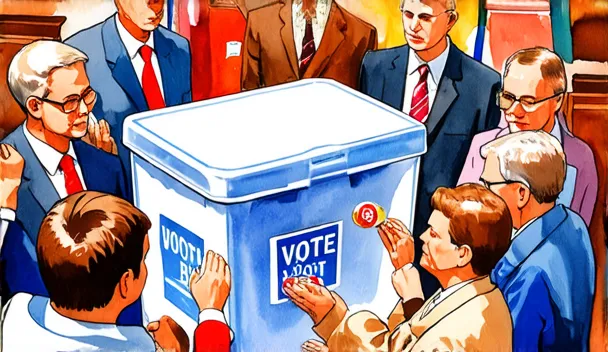
Voting Rights Representation
One of the most promising applications of blockchain tokens is in the realm of voting rights representation.
Blockchain programs can enforce published voting rules and preserve an audit trail, but they do not automatically prevent manipulation or coercion. Designers must address identity, duplicate voting, privacy, compromised devices, administrator authority, key recovery, accessibility, disputes, and legal requirements.
This not only increases trust in the voting process but also provides a clear audit trail, allowing for verification of results without compromising voter anonymity.
New Investment Opportunities with Blockchain Tokens
Blockchain tokens are opening up new avenues for investment, providing users with novel opportunities to engage with various markets and assets.
The versatility of these tokens is evident in their ability to represent a wide range of tangible and intangible items, from art pieces to real estate indexes.
For instance, projects like Parcl's city indexes allow users to speculate on the price movements of real estate across the globe, effectively democratizing access to the real estate market.
Novel Use Cases for Blockchain Tokens Beyond Cryptocurrency
Blockchain tokens are increasingly being utilized in novel applications beyond their traditional role as cryptocurrencies.
This expansion is driven by the versatility and programmability inherent to blockchain technology, allowing tokens to represent a wide range of assets and facilitate complex transactions.
For instance, Kamino Finance's use of tokens for optimizing liquidity management showcases how blockchain can enhance efficiency in financial transactions. Similarly, Parcl's tokenization of real estate indexes demonstrates how blockchain can democratize access to traditionally inaccessible markets.
These novel applications highlight the potential of blockchain technology to transform various aspects of our lives, from finance and governance to identity verification and security.
As innovators continue to explore new use cases for blockchain tokens, it is evident that their impact will extend far beyond the realm of digital currency.
The Future of Token Adoption: Challenges, Opportunities, and Potential Impact

Industry-Wide Adoption Rates and Potential Impact
The widespread adoption of blockchain tokens across various industries is poised to have a profound impact on traditional systems. As more companies and individuals begin to utilize these tokens for diverse applications, the potential benefits of increased efficiency, security, and transparency become more apparent.
For instance, Kamino Finance's use of token-based governance systems showcases how blockchain can enhance decision-making processes in decentralized communities, while Parcl's tokenization of real estate indexes demonstrates the potential for democratizing access to traditionally inaccessible markets.
Overcoming Challenges to Mainstream Token Adoption
Mainstream integration of blockchain tokens faces several challenges, including regulatory uncertainty, scalability issues, and user education.
To overcome these barriers, innovators are exploring new use cases and applications that demonstrate the potential of blockchain technology beyond cryptocurrency.
For instance, Kamino Finance's token-based governance system showcases how decentralized decision-making can be efficient and secure.
Capitalizing on Emerging Governance and Access Control Opportunities
The integration of blockchain tokens in governance and access control systems is revolutionizing how decentralized communities make decisions and manage permissions.
By leveraging the unique characteristics of blockchain technology, such as programmability and decentralization, token-based governance models are enabling secure, transparent, and efficient decision-making processes.
For instance, projects like Kamino Finance have implemented token-based voting systems, allowing users to participate in proposals related to liquidity management and strategy adjustments.
This approach not only empowers users but also ensures that decisions reflect the interests of the broader community.
Moreover, blockchain tokens are being utilized to create sophisticated identity verification systems, enabling users to control their digital identities and manage access to various services or platforms.
The combination of token-based governance and advanced security features makes decentralized networks more resilient and secure.
As innovators continue to explore new applications for blockchain technology, it is evident that the potential impact of token adoption will extend far beyond the realm of digital currency, transforming various aspects of our lives and industries alike.
Conclusion
The potential applications of blockchain tokens extend far beyond their use in cryptocurrency, offering a wide range of benefits and opportunities across various industries. From facilitating decentralized governance and enhancing security through access control and identity verification, to tokenizing assets on platforms like Solana, the versatility of blockchain tokens is undeniable.
As explored throughout this post, these tokens can represent voting rights, unlock new investment opportunities, and even enable novel use cases beyond traditional cryptocurrency applications. While challenges remain to mainstream adoption, the future of token integration holds immense potential for transforming governance, access control, and digital ownership.
As we continue to navigate this evolving landscape, one thing is clear: blockchain tokens are poised to play a significant role in shaping the future of various sectors, and their impact will only continue to grow.