
Archived article · Original source date: 2024-08-30
This article is preserved from the previous Solana Bulls site as a historical archive. It reflects its original context; references to products, people, market conditions, eligibility, or rules may no longer be current.
Editorial note: This article is educational and is not financial, investment, legal, or tax advice. Products, protocols, yields, fees, liquidity, regulations, and tax treatment can change; verify current primary sources and evaluate the specific risks before acting.
This blog post delves into the concept of mutable fungible tokens, exploring the key characteristics, benefits, and challenges associated with this emerging token standard. From customization strategies to risk management techniques, we will examine the trade-offs between flexibility and stability in digital assets, providing valuable insights for developers, investors, and users navigating this rapidly changing landscape.
Understanding Mutable Fungible Tokens: Key Characteristics and Framework
Defining Mutable Fungible Tokens
At its core, a mutable fungible token (MFT) represents an innovative fusion of two traditionally distinct concepts in digital assets.
The term 'fungible' refers to the interchangeable nature of tokens within a particular class or category. This means that, much like how one US dollar can be seamlessly exchanged for another without any loss in value or distinction, fungible tokens are considered equal and indistinguishable from one another.
Tether's pioneering work with USDT has exemplified this concept in the realm of stablecoins.
Implications of Flexibility in Token Properties
The introduction of mutability in token properties signifies a paradigm shift in how digital assets are perceived and utilized within the blockchain ecosystem. This flexibility allows for the customization of tokens to fit specific use cases, much like how Tether's USDT stablecoin has enabled a bridge between traditional finance and blockchain technology.
However, this adaptability also raises questions about the potential impact on token stability, a characteristic that is often at odds with flexibility. For instance, in projects like Star Atlas, where the value of in-game assets can fluctuate based on player actions, the mutable nature of these digital assets can either enhance or undermine their stability.
In contrast, protocols such as Margin Fi and Kamino Finance demonstrate how flexibility in token properties can be harnessed to simplify user experiences and maximize returns in DeFi practices, suggesting that the key lies in balancing mutability with mechanisms that maintain stability.
Conceptual Framework for Understanding Mutable Fungible Tokens
To grasp the essence of mutable fungible tokens, it's crucial to understand that they represent a dynamic evolution within the digital asset landscape.
At their core, these tokens are designed to adapt and change over time, diverging from the traditional immutable nature of cryptocurrencies.
The malleability of these assets enables them to be customized or altered based on specific conditions or events, making them highly versatile for various applications.
This characteristic introduces a new layer of complexity but also opens up possibilities for innovative use cases in gaming, finance, and beyond.
Leveraging Flexibility: Customization Benefits and Management Strategies

Customizing Token Attributes for Enhanced Utility
One of the most compelling benefits of mutable fungible tokens (MFTs) is their ability to be customized according to specific use cases.
This flexibility allows developers to tailor token attributes in a way that enhances their utility and applicability within diverse contexts. For instance, in the realm of gaming, MFTs can be designed with unique properties that simulate real-world dynamics or reflect in-game accomplishments.
Star Atlas exemplifies this concept by integrating blockchain mechanics into its immersive game environment, where every asset holds tangible value.
By customizing token attributes, developers can unlock novel applications and create new opportunities for user engagement.
Dynamic Token Properties in Real-World Applications
The dynamic nature of mutable fungible tokens has far-reaching implications across various real-world applications.
In gaming, for instance, projects like Star Atlas leverage the malleability of digital assets to create immersive experiences where player actions directly influence the value and properties of in-game assets.
This not only enhances engagement but also empowers players with a tangible stake in the game's universe, blurring the lines between the virtual and real-world economies.
In DeFi practices, protocols such as Margin Fi and Kamino Finance demonstrate how flexibility in token properties can be harnessed to simplify user experiences and maximize returns.
By adapting to changing market conditions or user needs, these tokens enable a more responsive and efficient financial ecosystem.
For example, Jupiter Aggregator's sophisticated algorithm dynamically sifts through fragmented liquidity landscapes to present optimized trading paths, thereby maximizing financial outcomes for its users.
These applications underscore the potential of mutable fungible tokens in crafting innovative solutions that balance flexibility with stability, catering to diverse use cases across gaming, finance, and beyond.
As this technology continues to evolve, it's likely to reshape our understanding of digital assets and their role in bridging traditional and blockchain-based economies.
Mitigating Stability Risks through Adaptive Management
As mutable fungible tokens continue to redefine the digital asset landscape, mitigating stability risks becomes a crucial aspect of their management.
Adaptive management strategies play a pivotal role in this context, enabling developers and users to navigate the complexities introduced by token mutability.
One effective approach is to implement dynamic feedback loops that monitor token performance in real-time, allowing for swift adjustments as market conditions or user behaviors necessitate change.
This adaptive stance not only helps maintain stability but also fosters an environment where tokens can evolve without compromising their core value proposition.
Assessing Stability Risks: Challenges and Concerns of Mutable Fungible Tokens

Risks Associated with Changing Token Properties
One of the primary concerns associated with mutable fungible tokens (MFTs) is the potential risks that emerge from altering token properties.
This malleability, while beneficial for customization and adaptability, introduces complexities that can impact token stability.
For instance, if a token's attributes are changed in response to market conditions or user behaviors, there may be unintended consequences on its value or usability.
Such changes could lead to a loss of trust among users, negatively affecting the token's adoption rate and overall ecosystem health.
Impact on Investor Confidence
The introduction of mutability in digital assets, as seen in mutable fungible tokens (MFTs), can have a profound impact on investor confidence. One of the key concerns is that this malleability could potentially undermine the stability and reliability that investors typically seek in their investments.
For instance, if the properties of an MFT are altered in a way that negatively impacts its value or utility, it may lead to a loss of trust among investors. This erosion of confidence can have far-reaching consequences, including reduced adoption rates, decreased market liquidity, and ultimately, a dampened enthusiasm for the digital asset as a whole.
On the other hand, when properly managed and communicated, the flexibility offered by MFTs can also be seen as a positive attribute that enhances investor confidence.
For example, if an MFT's mutable nature allows it to adapt and evolve in response to changing market conditions or user needs, this could be perceived as a sign of resilience and agility.
Platforms such as Margin Fi and Kamino Finance demonstrate how flexibility in token properties can be harnessed to simplify user experiences and maximize returns, thereby fostering an environment where investors feel more secure and confident in their investments.
Ultimately, the impact on investor confidence will depend on how effectively the mutable nature of digital assets is managed and presented.
By embracing transparency, implementing robust risk management strategies, and ensuring clear communication with stakeholders, developers can mitigate potential risks and cultivate a positive perception among investors.
This approach will safeguard the stability and reliability that are crucial for widespread adoption.
Risk Management Strategies for Mutable Fungible Tokens
Effective risk management is paramount in navigating the complex landscape of mutable fungible tokens.
To mitigate potential stability risks, developers and users can employ several adaptive strategies. Implementing dynamic feedback loops that monitor token performance in real-time allows for swift adjustments as market conditions or user behaviors necessitate change.
This approach enables a proactive stance, fostering an environment where tokens can evolve without compromising their core value proposition.
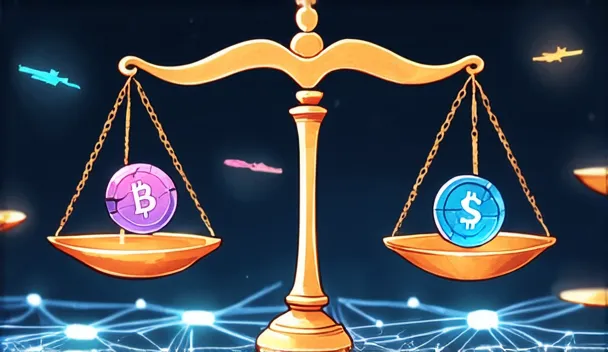
Balancing Competing Interests: Token Stability vs. Flexibility

The Importance of Predictable Value in Digital Assets
One of the cornerstones of any successful digital asset ecosystem is the concept of predictable value. As mutable fungible tokens (MFTs) continue to redefine the digital asset landscape, it's crucial that their inherent malleability doesn't undermine this predictability.
In traditional finance, investors often rely on stable assets like bonds or commodities as a hedge against market volatility. Similarly, in the blockchain space, predictable value serves as an anchor for investor confidence and stability.
The introduction of mutability in digital assets requires developers to implement robust risk management strategies that maintain this predictability while still allowing tokens to adapt and evolve.
Tether's pioneering work with USDT stablecoins has demonstrated how a well-designed token can offer a reliable store of value, even in the face of market fluctuations.
Navigating the Flexibility-Stability Tradeoff
As we delve into the realm of mutable fungible tokens, it becomes increasingly evident that striking a balance between flexibility and stability is crucial for their successful implementation.
This trade-off requires careful consideration of the token's design, user needs, and market conditions to ensure that its malleable nature does not compromise its core value proposition.
By examining existing projects such as Star Atlas and Margin Fi, we can identify potential pathways for navigating this delicate balance.
Mitigating Risks through Strategic Planning
Effective risk mitigation in mutable fungible tokens requires a strategic approach that balances flexibility with stability. By implementing dynamic feedback loops and real-time monitoring, developers can swiftly adjust token properties as market conditions or user behaviors necessitate change. This proactive stance fosters an environment where tokens can evolve without compromising their core value proposition.
Additionally, incorporating robust risk management strategies, such as hedging mechanisms or insurance protocols, can further mitigate potential stability risks. For instance, Margin Fi's borrowing and lending protocol demonstrates how adaptive strategies can simplify user experiences while maximizing returns in DeFi practices.
Similarly, Kamino Finance's autonomous management of concentrated liquidity market maker positions showcases the potential for quantitative models to optimize token performance. By embracing strategic planning and risk management, developers can safeguard the stability and reliability of mutable fungible tokens, ultimately cultivating trust among users and investors.
Comparative Analysis: Non-Fungible and Fungible Token Standards

Overview of Non-Fungible Tokens and Their Differences
Non-fungible tokens (NFTs) represent a distinct class of digital assets that diverge from the traditional concept of fungibility. Unlike mutable fungible tokens, which are designed to be interchangeable and indistinguishable from one another, NFTs are unique, distinguishable, and often used to represent ownership or provenance in digital goods such as art, collectibles, and even in-game items.
This inherent uniqueness is a core characteristic that sets NFTs apart from other token standards, allowing them to capture complex data structures and attributes that cannot be replicated by fungible tokens.
Comparing Token Properties and Trade-offs
The introduction of mutable fungible tokens (MFTs) into the digital asset landscape necessitates a comparative analysis with non-fungible token standards. This comparison highlights key differences in token properties, such as customizability, adaptability, and tradability.
While MFTs offer flexibility through their mutable nature, they also introduce complexities that can impact token stability.
Non-fungible tokens (NFTs), on the other hand, are designed to be unique and immutable, making them ideal for applications where scarcity and ownership are paramount.
Flexibility and Stability in Fungible Token Implementations
The implementation of mutable fungible tokens (MFTs) requires a delicate balance between flexibility and stability.
As we've seen with Tether's pioneering work on USDT stablecoins, the key to successful MFTs lies in their ability to adapt while maintaining predictable value.
In gaming applications like Star Atlas, flexibility is harnessed to create immersive experiences where player actions directly influence the value and properties of in-game assets.
This dynamic nature can either enhance or undermine stability, depending on how effectively it's managed.
Margin Fi's borrowing and lending protocol demonstrates how MFTs can simplify user experiences while maximizing returns in DeFi practices.
However, this flexibility also introduces complexity and potential risks, necessitating robust risk management strategies to maintain stability.
Ultimately, the trade-off between flexibility and stability in MFT implementations requires careful consideration of token design, user needs, and market conditions.
By examining existing projects like Jupiter Aggregator's sophisticated algorithm for optimizing trading paths, we can identify potential pathways for navigating this delicate balance.
Effective risk mitigation strategies, such as dynamic feedback loops and real-time monitoring, are crucial in safeguarding the stability and reliability of MFTs.
Practical Implementation: Real-World Applications and Use Cases

Balancing Flexibility with Stability in Practice
As we explore the practical applications of mutable fungible tokens, it becomes evident that balancing flexibility with stability is crucial for their successful implementation.
This delicate balance requires developers to navigate a complex landscape where token properties can be customized and adapted in response to changing user needs or market conditions.
To achieve this equilibrium, projects such as Margin Fi and Kamino Finance have demonstrated the importance of incorporating robust risk management strategies and adaptive mechanisms into their platforms.
By employing dynamic feedback loops and real-time monitoring, these tokens can evolve without compromising their core value proposition.
Applications in Finance, Gaming, and Beyond
The versatility of mutable fungible tokens (MFTs) is evident across various applications, from finance to gaming.
In the realm of DeFi, protocols such as Margin Fi and Kamino Finance have successfully harnessed the flexibility offered by MFTs to simplify user experiences and maximize returns.
For instance, Margin Fi's borrowing and lending protocol has streamlined access to financial tools, allowing users to engage in borrowing and lending activities with minimal friction.
Meanwhile, Kamino Finance's autonomous management of CLMM positions has increased capital efficiency and earnings potential for liquidity providers.
In gaming, projects like Star Atlas have leveraged the malleability of digital assets to create immersive experiences where player actions directly influence the value and properties of in-game assets.
Practical Considerations for Successful Implementation
As we navigate the complex landscape of mutable fungible tokens, it's crucial to acknowledge that their successful implementation hinges on a multitude of practical considerations.
One of the key challenges is striking a balance between flexibility and stability, as the malleable nature of these tokens can either enhance or undermine their core value proposition.
To mitigate potential risks, developers must implement robust risk management strategies, such as dynamic feedback loops and real-time monitoring, to swiftly adjust token properties as market conditions or user behaviors necessitate change.
This adaptive stance not only helps maintain stability but also fosters an environment where tokens can evolve without compromising their inherent value.
Conclusion
In this exploration of mutable fungible tokens, we have delved into the complexities of balancing flexibility and stability in digital assets. Through a deep dive into key characteristics, management strategies, and comparative analysis, it has become clear that token flexibility can be both a double-edged sword and a powerful tool for customization.
While risks associated with changing token properties must be carefully mitigated, strategic planning and adaptive management can help navigate the tradeoff between flexibility and stability.
As we look to the future of digital assets, one thing is certain: mutable fungible tokens will continue to play a significant role in shaping the landscape of blockchain technology, offering unparalleled opportunities for innovation and growth.