
Archived article · Original source date: 2024-08-01
This article is preserved from the previous Solana Bulls site as a historical archive. It reflects its original context; references to products, people, market conditions, eligibility, or rules may no longer be current.
In today's blockchain landscape, where security, transparency, and efficiency are paramount, smart contracts have become a vital component in facilitating seamless transactions. As industries increasingly adopt blockchain technology to streamline their operations, understanding smart contracts is crucial for unlocking their full potential.
A self-executing program that automates various processes, a smart contract plays a pivotal role in the functioning of blockchain networks. But what exactly are smart contracts, how do they integrate with blockchains, and what benefits do they offer?
This article provides an in-depth exploration of their role in blockchain ecosystems, how they manage state, the advantages they bring to the table, including deterministic outputs and trustless execution, and the key characteristics that define them.
Defining Smart Contracts: Role in Blockchain Ecosystems
Smart Contract Fundamentals
A smart contract is a self-executing program that automates the enforcement and execution of an agreement between parties, comprising a set of rules and logic written in code.
This automation enables faster, more efficient, and tamper-evident transactions.
Blockchain Ecosystem Roles and Functionality Extension
Smart contracts serve as autonomous agents in blockchain ecosystems, executing predefined rules and logic to facilitate secure and transparent interactions between parties. They can automate complex business logic and rules, enabling the creation of more sophisticated decentralized applications (dApps) and extending use cases for blockchain technology.
For example, this technology has various practical applications, such as supply chain management, voting systems, and decentralized finance (DeFi). For instance, a smart contract in a supply chain management system can automatically trigger payment when a shipment is delivered or release payment to a supplier when goods are received by a buyer.
How Smart Contracts Integrate with Blockchains and Manage State
Determining Blockchain State and Executing Smart Contract Functions
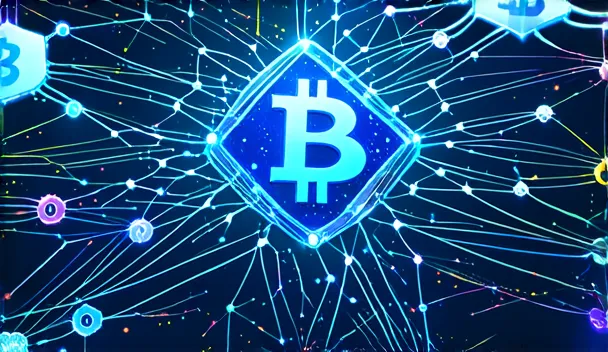
A blockchain's state is determined by user interactions and transactions, akin to a digital ledger recording changes in real-time.
This collective "memory" contains the history of every transaction, smart contract execution, and user interaction.
A network of nodes maintains this distributed ledger through complex algorithms and consensus mechanisms.
When a user initiates an action on a blockchain, such as sending cryptocurrency or triggering an event, the smart contract's functions are executed.
This involves verifying conditions set by the contract and updating the state accordingly.
Smart contracts are self-executing, meaning that once criteria are met, the outcome is automatic and irreversible.
The Role of Determinism in Ensuring Consistent Outputs
Deterministic algorithms ensure that smart contracts produce consistent outputs across all nodes within a blockchain network.
This guarantees predictable and identical outcomes, maintaining transparency, fairness, and trust within blockchain-based systems.
Benefits of Smart Contracts: Deterministic Outputs, Trustless Execution, and More

Ensuring Transaction Consistency and Security
Smart contracts ensure transaction consistency by executing code deterministically, guaranteeing consistent and predictable outcomes.
This eliminates the risk of human error or bias, as predefined inputs always yield the same output.
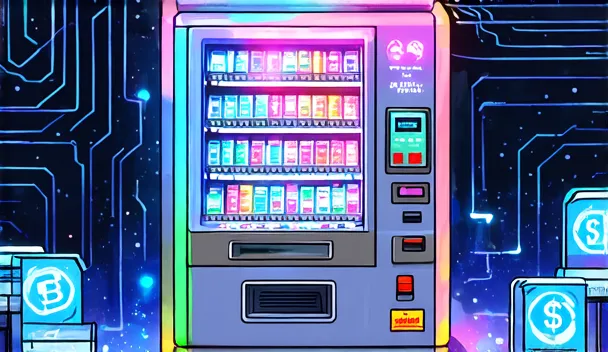
For example, a vending machine dispenses products uniformly based on predefined rules, illustrating how smart contracts automate transactions to ensure uniformity and consistency.
Autonomy, Transparency, and Additional Benefits
Smart contracts offer autonomy by allowing self-executing agreements to function without intermediaries or third-party influence. This makes them ideal for decentralized applications like DeFi platforms.
Their open-source nature and blockchain architecture facilitate transparency and auditability, promoting accountability among parties involved in a contract.
Furthermore, smart contracts can be applied to various use cases, including supply chain management, voting systems, digital identity verification, and more.
Key Characteristics of Smart Contract Code: Autonomy, Immutability, Transparency, Security
Autonomous Execution and Self-Enforcement
A smart contract's autonomy allows it to execute automatically without intermediaries or external influences, thanks to the blockchain's decentralized architecture.
This self-executing nature is comparable to a vending machine: you input data (digital assets) and select your choice, and the "machine" dispenses output based on predetermined programming - all without human intervention or bias.
Immutable Transactions
Smart contract code facilitates tamper-evident transactions by recording them on a blockchain.
Cryptographic algorithms ensure any attempts to modify or manipulate these transactions are detectable and rejected by the network, providing unparalleled protection against fraud and corruption.
This security is particularly valuable in industries where trust and integrity are crucial.
Transparency and Security through Open-Source Coding
Smart contracts operate transparently, allowing parties to track and verify transactions through open-source coding.
This enables developers to review and audit the contract's functionality.
Security measures such as cryptographic algorithms and multi-signature wallets safeguard against unauthorized access, ensuring only authorized parties can execute or modify the contract's code.
Exploring Types of Smart Contracts and Their Applications
Decentralized Finance (DeFi) Contracts
Decentralized Finance (DeFi) contracts enable the creation of decentralized financial applications on blockchain networks, automating processes like lending, borrowing, and trading without intermediaries.
They can be used to create various applications, including decentralized exchanges (DEXs), stablecoins, and yield farming platforms.
Gaming and Virtual Environment Contracts
These smart contracts revolutionize digital interactions by enabling decentralized, immersive experiences with activities like virtual land ownership, in-game item trading, and skill-based competitions.
Notable examples include Decentraland, a blockchain-based virtual reality platform for buying, selling, and managing virtual land, and CryptoKitties, where players collect, breed, and trade unique digital cats.
Supply Chain Management and Asset Tokenization Contracts
Smart contracts can manage complex supply chain processes, enabling transparent and secure tracking of goods from production to delivery.
They automate payment settlements between suppliers and manufacturers, reducing intermediaries and minimizing disputes.
Additionally, asset tokenization contracts represent physical assets like real estate or art as digital tokens on a blockchain, allowing for fractional ownership, increased liquidity, and reduced transfer times.
Conclusion
This article has explored the concept of smart contracts, defining them as self-executing agreements with terms written directly into code. We also examined their integration with blockchains to manage state and produce deterministic outputs.
The benefits of smart contracts were highlighted, including trustless execution, immutability, and transparency. Furthermore, we analyzed key characteristics of smart contract code, such as autonomy, security, and transparency.
As blockchain technology evolves, the potential for smart contracts to revolutionize industries like DeFi, gaming, and supply chain management is vast. To further unlock this potential, consider exploring emerging platforms or contributing to open-source projects that integrate smart contracts with innovative technologies like AI or IoT.
By pushing the boundaries of what's possible, developers can unlock new efficiencies, security measures, and innovations across various sectors.