
Archived article · Original source date: 2024-08-02
This article is preserved from the previous Solana Bulls site as a historical archive. It reflects its original context; references to products, people, market conditions, eligibility, or rules may no longer be current.
In the vast landscape of blockchain technology, block rewards stand out as a vital component that powers the very fabric of decentralized networks.
By incentivizing miners to participate in the validation process, block rewards play a crucial role in sustaining the integrity and security of blockchain ecosystems.
Introduction to Block Rewards: Definition, Purpose, and Functionality
Defining Block Rewards as Incentives for Miner Participation
Block rewards are a critical component of blockchain technology, serving as a motivational force that drives miners to participate in the validation and verification process.
Imagine a decentralized network where individuals with powerful computers compete to solve complex mathematical puzzles, and the first one to crack the code gets rewarded with a certain amount of cryptocurrency. This is essentially how block rewards work.
By offering a tangible incentive, block rewards encourage miners to contribute their computational power to the network, thereby ensuring the integrity, security, and efficiency of blockchain transactions.
Understanding the Role of Block Rewards in Sustaining Blockchain Networks
Block rewards play a crucial role in sustaining blockchain networks by incentivizing miners and validators to participate in the validation process.
In essence, block rewards are a form of compensation for the effort and resources expended in solving complex mathematical puzzles and validating transactions. This mechanism helps maintain the integrity and security of the network by encouraging participants to act honestly and adhere to the rules.
Think of it as a "fuel" that powers the blockchain engine, enabling it to process transactions efficiently and securely.
By providing a tangible reward for their efforts, block rewards ensure the continued operation and growth of blockchain networks.
Mechanisms of Block Reward Generation and Distribution
The generation and distribution of block rewards occur through a complex interplay of cryptography, game theory, and network consensus. In essence, block rewards are generated when a miner successfully validates a new block of transactions on the blockchain, solving a computationally intensive puzzle in the process.
This solution is achieved by competing miners using powerful computers to solve a mathematical problem, with the first miner to succeed earning the right to validate the new block and claim its associated reward. The distribution of this reward is typically divided between two components: a newly minted cryptocurrency (e.g., Bitcoin) and transaction fees collected from the validated transactions within the block.
Token Generation and Inflation Management via Block Rewards
Block Rewards as a Means of Token Creation and Inflation Control
Block rewards serve as a dual-purpose mechanism in blockchain networks, facilitating both token generation and inflation management.
By incentivizing miners to participate in the validation process, block rewards ensure the integrity and security of transactions on the network. The tokens generated through this process are then introduced into circulation, effectively creating new money.
This carefully calibrated system allows for controlled inflation, as the rate at which new tokens are minted can be predetermined.
For instance, Bitcoin's protocol halves its block reward every 210,000 blocks, approximately four years, to prevent rampant inflation and maintain a scarce supply of coins.
Miner Participation in Token Issuance and Distribution Processes
In proof-of-work (PoW) blockchain networks, miners play a crucial role in token issuance and distribution through the block reward mechanism. Miners compete to solve complex mathematical puzzles, with the winner earning the right to validate transactions, create new blocks, and mint new tokens.
This process is analogous to a central bank printing new money, but instead of relying on a centralized authority, miners use computational power to secure the network and generate new tokens. By participating in this process, miners are incentivized to maintain the integrity of the blockchain, ensuring a decentralized and trustless system for token creation and distribution.
Leveraging Block Rewards for Network Growth and Engagement
Block rewards serve as a vital catalyst for network growth and engagement. By incentivizing miners to validate transactions and create new blocks, block rewards foster a competitive environment that encourages participation and secures the blockchain ecosystem.
This mechanism is analogous to a "proof-of-stake" system, where validators are rewarded with native tokens for their contributions. The resulting token generation process not only fuels network growth but also manages inflation by introducing a controlled supply of new coins into circulation.
As more miners join the network, the difficulty level of mining increases, ensuring that block rewards remain a viable and sustainable incentive for maintaining the integrity and security of the blockchain.
The Role of Block Rewards in Maintaining Blockchain Security and Decentralization
Incentivizing Miners through Block Rewards: Security and Decentralization
Block rewards play a crucial role in maintaining blockchain security and decentralization by incentivizing miners to participate in the network. By offering a reward for each block mined, miners are motivated to solve complex mathematical puzzles, validate transactions, and add new blocks to the chain.
This process not only secures the network but also promotes decentralization as multiple miners compete to solve the puzzle first, preventing any single entity from controlling the blockchain.
The block reward system can be likened to a treasure hunt, where miners search for the hidden "treasure" (the solution to the mathematical puzzle), and the first one to find it gets rewarded with newly minted coins and transaction fees.
Decentralized Participation and Its Impact on Blockchain Security
The decentralized nature of blockchain technology relies heavily on block rewards to incentivize participation from a vast network of nodes and miners.
This distributed architecture allows for multiple entities to validate transactions, ensuring that no single point of control exists. In essence, block rewards facilitate the democratization of blockchain maintenance, enabling a wide range of participants to contribute to the security and integrity of the network.
For instance, Bitcoin's proof-of-work mechanism encourages miners to compete in solving complex mathematical puzzles, thereby validating transactions and securing the blockchain.
This competition fosters a robust and decentralized ecosystem, making it increasingly difficult for malicious actors to manipulate or control the network.
Reward Mechanisms for Fostering a Healthy Blockchain Ecosystem
Block rewards play a crucial role in maintaining blockchain security and decentralization by incentivizing miners to validate transactions and create new blocks.
This reward mechanism fosters a healthy ecosystem where miners compete to solve complex mathematical puzzles, thereby securing the network and verifying transactions. The reward system is designed to encourage participation, ensuring that the blockchain remains decentralized and resistant to attacks.
For instance, in Bitcoin's proof-of-work model, miners are rewarded with newly minted coins and transaction fees for validating transactions and creating new blocks.
This mechanism promotes a self-sustaining ecosystem where miners are motivated to maintain the integrity of the blockchain, ensuring its stability and security.
Variations in Block Reward Structures: Fixed, Dynamic, and Hybrid Models
Characteristics of Different Block Reward Structures
Various blockchain networks employ distinct block reward structures, each with its unique characteristics. Fixed block reward models, such as Bitcoin's, offer a predetermined number of coins for each block mined, regardless of the network's activity.
Dynamic block reward models, on the other hand, adjust rewards based on factors like network congestion or the miner's computational power. Hybrid models combine elements of both fixed and dynamic structures, offering a balance between stability and adaptability.
For instance, some networks may offer a fixed reward for solving complex puzzles but dynamically adjust the puzzle's difficulty level based on the network's activity. These variations in block reward structures can significantly impact a blockchain's security, scalability, and overall ecosystem.
Algorithmic Adjustments and Their Market Implications
Algorithmic adjustments play a crucial role in determining block reward structures, influencing network security, and shaping market dynamics.
In fixed models, the algorithm remains unchanged, whereas dynamic models adjust the reward based on factors like block time or mining difficulty. Hybrid models blend elements from both approaches.
For instance, Bitcoin's halving mechanism reduces block rewards by 50% every four years to prevent inflation, while Ethereum's Casper protocol adjusts rewards based on validator behavior.
These adjustments can impact market sentiment and coin prices, as seen in the 2016 Bitcoin halving event, which led to a significant price increase.
By understanding these algorithmic nuances, investors can better navigate blockchain markets.
Exploring Hybrid Models for Enhanced Blockchain Functionality
Hybrid block reward models combine elements from both fixed and dynamic structures, aiming to strike a balance between incentivizing miners and maintaining network stability.
These models often feature a base reward rate that adjusts according to specific conditions or events within the blockchain ecosystem. For instance, a hybrid model might incorporate a variable reward component tied to the network's transaction volume or the number of active nodes.
This adaptive approach allows for more flexibility in responding to changes in the network's growth and usage patterns. By blending the benefits of fixed and dynamic models, hybrid block rewards can promote a more resilient and responsive blockchain infrastructure.
The Impact of Block Rewards on Miners and the Broader Blockchain Ecosystem
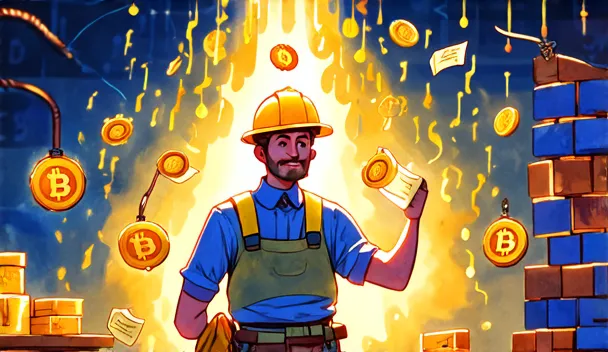
Motivating Miners through Block Rewards: A Deep Dive
Block rewards play a crucial role in motivating miners to participate in the blockchain ecosystem. By incentivizing miners with newly minted coins and transaction fees, block rewards ensure that the network remains secure and decentralized.
Think of it like a treasure hunt, where miners compete to solve complex mathematical puzzles to uncover the hidden treasure - in this case, a new block of transactions. The reward for solving the puzzle is not only the satisfaction of being part of the blockchain's upkeep but also a tangible incentive in the form of cryptocurrency.
This clever mechanism encourages miners to continue validating transactions and maintaining the integrity of the network, ultimately fueling the growth of the broader blockchain ecosystem.
The Broader Ecosystem Impact of Block Rewards on Miner Participation
Block rewards play a significant role in incentivizing miner participation, which has a ripple effect throughout the broader blockchain ecosystem.
When miners are rewarded with newly minted coins and transaction fees, it motivates them to continue validating transactions and maintaining the integrity of the network.
This, in turn, ensures the security and stability of the blockchain, allowing users to trust that their transactions will be processed efficiently and reliably.
In essence, block rewards create a self-sustaining ecosystem where miners are encouraged to participate, which ultimately benefits the entire community by keeping the network running smoothly.
Assessing the Role of Block Rewards in Ensuring Blockchain Security and Decentralization
Block rewards play a crucial role in ensuring the security and decentralization of blockchain networks. By incentivizing miners to validate transactions and create new blocks, block rewards help maintain the integrity of the blockchain.
This is analogous to how a referee in a sports game ensures fair play - just as a referee enforces rules to ensure a level playing field, miners verify transactions to prevent fraudulent activity on the blockchain.
The reward mechanism also promotes decentralization by encouraging participation from a diverse range of miners, rather than relying on a centralized authority. This helps maintain the distributed nature of the network and prevents any single entity from dominating the validation process.
Conclusion
In this comprehensive guide, we've delved into the world of block rewards, exploring their definition, purpose, and functionality within blockchain networks. We've examined how block rewards facilitate token generation and inflation management, while also playing a crucial role in maintaining security and decentralization.
By analyzing various block reward structures, including fixed, dynamic, and hybrid models, we've gained insight into the mechanisms that incentivize miner participation and foster a healthy ecosystem.
The impact of block rewards on miners and the broader blockchain ecosystem has been assessed, highlighting their significance in sustaining network growth and engagement. As blockchain technology continues to evolve, understanding the intricacies of block rewards will become increasingly important for stakeholders seeking to navigate this complex landscape and unlock its full potential.