

Archived article · Original source date: 2024-08-23
This article is preserved from the previous Solana Bulls site as a historical archive. It reflects its original context; references to products, people, market conditions, eligibility, or rules may no longer be current.
Editorial note: This article is educational and is not financial, investment, legal, or tax advice. Products, protocols, yields, fees, liquidity, regulations, and tax treatment can change; verify current primary sources and evaluate the specific risks before acting.
To succeed, these ecosystems must balance scalability, security, and interoperability.
Solana's innovative architecture and technical infrastructure make it uniquely positioned to address this challenge.
Defining Digital Economies: A New Decentralized Paradigm
Characteristics of Thriving Digital Economies and Shifts in Economic Paradigms
Digital economies, such as those supported by Solana, are characterized by decentralization, user empowerment, scalability, security, and interoperability.
These traits foster community engagement, efficient transactions, and resilience against threats. The advent of digital economies signals a significant shift in economic paradigms, marked by the redefinition of traditional roles and trust mechanisms.
This transformation opens avenues for more transparent and equitable systems but also poses challenges.
Infrastructure and Innovations
A successful digital economy requires robust infrastructure, including decentralized networks, cryptographic tools, and innovative technologies like Solana's blockchain architecture.
Balancing scalability, security, and interoperability is key. Companies such as Jupiter Aggregator enhance trading experiences by leveraging multiple DEXs for optimal prices and low slippage.
Platforms like Kamino Finance streamline the management of concentrated liquidity market maker positions, enabling efficient and secure transactions.
Overcoming Challenges in Building Digital Economies: Limitations and Opportunities

The Challenges of Building a Digital Economy
Digital economies face several challenges that must be addressed to ensure their long-term viability.
Balancing scalability with security is a primary hurdle, as increased network activity can lead to slower transaction processing times.
Achieving interoperability between different platforms and applications within these ecosystems remains a significant technical challenge.
Navigating Governance and Regulation
Digital economies require new governance frameworks that balance community empowerment with oversight and compliance.
Projects like SolBlaze's DAO-based treasury demonstrate community-driven governance, where participants can engage in decision-making processes through tokens like BLZE.
Platforms like Kamino Finance prioritize security and community engagement, integrating regulatory considerations into their fabric.
Mitigating Risks and Safeguarding Assets
Robust security measures are crucial in mitigating risks and safeguarding assets in digital economies.
SolBlaze's liquid staking pool enhances network decentralization by staking substantial amounts of SOL across a wide validator network. Jupiter Aggregator optimizes trading paths, ensuring users access the best possible prices with minimal slippage, reducing financial risk.
Kamino Finance streamlines liquidity management for market makers, increasing capital efficiency and earnings potential while minimizing exposure to unnecessary risks.
The Importance of Interoperability, Scalability, and Security in Thriving Ecosystems

Breaking Down Interoperability Barriers: Lessons from Solana's Growth
Digital economies thrive when they can seamlessly interact with various platforms and applications within their ecosystem.
This interoperability fosters innovation, enhances user experience, and drives growth.
Solana's innovative approach to addressing this issue offers valuable lessons. By leveraging its unique architecture and promoting collaboration among developers, Solana has broken down interoperability barriers.
Rapid Expansion Strategies for Digital Ecosystems
To facilitate rapid growth without compromising core characteristics, digital economies require strategies that emphasize scalability, security, and interoperability.
Solana's innovative architecture enables the development of tools and platforms that support such expansion. For example, SolBlaze's liquid staking pool demonstrates a scalable approach to enhancing decentralization by staking substantial amounts of SOL across a wide network of validators.
Enhancing Threat Protection and Mitigation
As digital economies grow more complex, safeguarding against potential risks becomes paramount.
Projects like SolBlaze's liquid staking pool play a pivotal role in enhancing network decentralization through the distribution of substantial amounts of SOL across a wide validator network.
This strategy improves the security posture of the blockchain and serves as a robust defense mechanism against centralization threats and validator attacks.
Inside the Solana Ecosystem: Core Components, Architecture, and Technical Infrastructure

Technical Building Blocks of the Solana Ecosystem
The Solana ecosystem is built on a robust technical infrastructure that enables its innovative approach to digital economies.
Its blockchain architecture balances scalability, security, and interoperability - essential components for thriving ecosystems.
Scalability, Security, and Interoperability Features: A Deep Dive
Notably, SolBlaze's liquid staking pool enhances network decentralization by staking substantial amounts of SOL across a wide validator network. This not only improves the security posture but also contributes to more efficient transactions.
Jupiter Aggregator's optimized trading paths provide users with the best possible prices and lowest slippage, demonstrating how interoperability can be leveraged for enhanced user experience.
Node Management, Consensus Algorithms, and Validation Mechanisms Explained
The Solana ecosystem's resilience and efficiency are rooted in its node management, consensus algorithms, and validation mechanisms. Its decentralized network of nodes validates and processes transactions, ensuring the integrity and security of the blockchain.
Proof of History orders events; validators execute transactions, verify state transitions, and vote on forks through proof-of-stake consensus and Tower BFT.
Solana's Blockchain, Consensus, and Validation: A Deep Dive into Technical Capabilities

Understanding the Foundation of Solana's Blockchain
Solana combines proof-of-stake validators and Tower BFT consensus with Proof of History as a verifiable clock for ordering events.
This approach enables faster processing times and increased scalability compared to traditional proof-of-work or proof-of-stake models.
A Closer Look at Proof of History and its Applications
This innovation supports various applications, such as decentralized finance (DeFi) protocols like Jupiter Aggregator's optimized trading paths and liquid staking solutions like SolBlaze's BlazeStake pool.
Ensuring Network Security, Efficiency, and Performance
Solana's node management and validation mechanisms maintain the integrity and security of the blockchain.
Fostering Community Engagement in Digital Economies: Strategies for Sustainable Growth
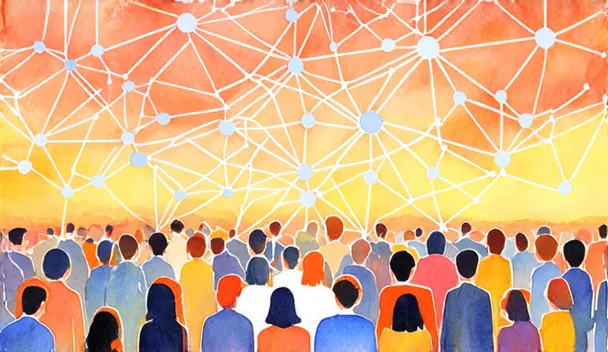
Incentivizing Community Participation and Collaboration
Digital economies rely on incentivizing community participation to drive growth and sustainability.
Solana's approach, exemplified by projects like SolBlaze, issues BLZE tokens that allow users to engage directly in the governance of its DAO-based treasury.
This empowers users and ensures the ecosystem remains responsive to community needs.
Strategies for Knowledge Sharing and Growth
To foster a collaborative environment, digital economies can create platforms and tools that facilitate interactions between developers, users, and stakeholders.
For instance, Jupiter Aggregator's optimized trading paths serve as both a resource for understanding DeFi complexities and an educational tool for liquidity providers to better understand market dynamics.
Dynamic Governance Models for Long-term Success
Digital economies require dynamic governance models that balance community empowerment with oversight and compliance.
Decentralized autonomous organizations (DAOs), like SolBlaze's BLZE, enable community-driven decision-making processes, promoting transparency and a sense of ownership within the community.
Conclusion
In conclusion, our examination of digital economies and the Solana ecosystem has yielded several key takeaways.
Firstly, thriving ecosystems are characterized by robust technical infrastructure, interoperability, scalability, and security. Secondly, building and governing digital economies poses unique challenges that require innovative solutions and community engagement strategies.
Lastly, Solana's commitment to decentralization, its consensus algorithm, and validation mechanisms make it an attractive platform for fostering sustainable growth.
As we look to the future, it is evident that Solana is positioned at the forefront of a revolution in digital economies.
With its focus on interoperability and robust architecture, Solana has the potential to unlock unprecedented opportunities for innovation and growth.
As the landscape continues to evolve, one thing is clear: Solana will play a pivotal role in shaping the future of digital economies.