

Archived article · Original source date: 2024-08-14
This article is preserved from the previous Solana Bulls site as a historical archive. It reflects its original context; references to products, people, market conditions, eligibility, or rules may no longer be current.
Editorial note: This article is educational and is not financial, investment, legal, or tax advice. Products, protocols, yields, fees, liquidity, regulations, and tax treatment can change; verify current primary sources and evaluate the specific risks before acting.
As we continue to rely heavily on social networks for communication, information sharing, and community building, concerns over data privacy, security, and censorship have sparked a growing debate about the viability of centralized platforms.
Meanwhile, blockchain technology has emerged as a potential game-changer in the digital landscape, offering decentralized solutions that prioritize user control and transparency - begging the question: should social networks be built on blockchains?
This blog post explores the possibilities and challenges of integrating blockchain technology into social networking, examining its potential to enhance user privacy, security, and decentralization while overcoming technical hurdles, regulatory complexities, and scalability concerns.
Unlocking Blockchain Technology: Fundamentals and Mechanics
Secure Information Exchange through Blockchain Technology
Blockchain technology enables secure information exchange by creating an immutable and transparent record of all transactions. Imagine a digital ledger that records every transaction, making it virtually tamper-evident.
This is in stark contrast to traditional social networks, where data is stored in centralized servers, making them vulnerable to hacking and data breaches.
Blockchain technology flips this script by distributing data across a network of nodes, ensuring that information exchange is secure, reliable, and resistant to censorship or manipulation. Distributed architecture, encryption, and hardware isolation can reduce particular risks, but they do not make a system impossible to access, manipulate, intercept, or compromise. Security depends on the complete application, keys, clients, authorities, dependencies, operations, and user actions.
A social application can use a blockchain for selected public records, ownership, payments, or governance, but distribution does not automatically encrypt messages, prevent interception, resist censorship, or establish data reliability. Private communication still needs end-to-end encryption, secure clients, metadata protection, key management, moderation, storage, and recovery.
At its core, blockchain technology is a decentralized digital ledger that records transactions across a network of computers. Imagine a virtual notebook (or "block") that contains multiple entries (or "transactions"), each verified by a group of trusted individuals (or "nodes").
This collective verification creates an unalterable record, as each block is linked to the previous one through cryptography.
A blockchain lets a distributed set of nodes verify and replicate state changes under shared rules rather than relying on one database operator. That transparency and persistence can be useful for social applications, but privacy, moderation, deletion, identity, cost, and governance require separate design choices.
Building Blocks of a Blockchain-Based Social Network
A blockchain-based social network is composed of several key components. At its core, a decentralized network of nodes stores and validates data through complex algorithms and cryptography.
This is often facilitated by a consensus mechanism, such as Proof of Work (PoW) or Proof of Stake (PoS), which ensures the integrity and security of transactions.
A distributed ledger, commonly referred to as a blockchain, records all activity across the network. Smart contracts, self-executing agreements with predetermined rules, can be integrated to automate various processes and interactions within the social network.
Furthermore, interoperability protocols enable seamless communication between different blockchains, allowing for a more diverse and interconnected ecosystem.
The Dark Side of Centralized Social Networking: Risks and Limitations

The Risks of Controlled Data Flow and Censorship
One of the most significant drawbacks of centralized social networking is the controlled data flow, where a single entity governs what information can be shared and who gets to see it. This not only limits freedom of expression but also creates an environment ripe for censorship.
Imagine having your voice silenced by an invisible hand, simply because your views don't align with those of the platform's administrators. The risks are real - think of instances where social media platforms have suspended or banned accounts without clear explanations or due process.
This kind of centralized control can lead to a chilling effect on online discourse, stifling meaningful conversations and undermining trust in social networks.
Security Threats and Breaches in Current Social Networking Models
The centralized nature of current social networking models creates a single point of failure, making them vulnerable to security threats and breaches.
The 2018 Cambridge Analytica scandal is a prime example, where millions of Facebook users' personal data was harvested without their consent. Similarly, the 2020 Twitter hack saw high-profile accounts compromised due to a vulnerability in the platform's internal systems.
These incidents demonstrate how centralized social networks can become breeding grounds for cyber attacks, compromising user data and trust. With a single entity controlling the network, a breach can have far-reaching consequences, affecting millions of users in one fell swoop.
Lack of Transparency and Accountability in Centralized Social Networks
Centralized social networks operate like black boxes, where data is collected, processed, and stored behind closed doors. This lack of transparency makes it difficult for users to understand how their personal information is being used, shared, or sold.
Moreover, when issues arise, such as data breaches or misinformation campaigns, it can be challenging to hold centralized social networks accountable.
For instance, in 2018, Facebook faced criticism for allowing Cambridge Analytica to harvest user data without consent. The incident highlighted the need for greater transparency and accountability in how social networks handle user data.
Revolutionizing Social Networks with Blockchain: Enhanced Privacy, Security, and Decentralization

Protecting User Privacy through Encrypted Data Storage
Public blockchains do not provide protocol-wide encryption, confidentiality, anonymity, or end-to-end communication security. Applications must separately minimize sensitive on-chain data and implement appropriate encryption, key management, access controls, transport security, retention, and privacy review. Traditional social networks store user information in centralized servers, making it vulnerable to hacking and exploitation.
In contrast, blockchain-based social networks can utilize decentralized storage solutions, such as InterPlanetary File System (IPFS), to securely store user data. This approach ensures that sensitive information is fragmented and dispersed across a network of nodes, rather than being stored in a single, easily exploitable location.
Immutable Records and Smart Contracts: Enhancing Security
Blockchain technology introduces a game-changing aspect to social networks: immutable records. Unlike traditional databases, where information can be altered or deleted, blockchain's decentralized ledger ensures that all transactions are time-stamped and stored in a permanent, unalterable record.
This feature is particularly crucial for social media platforms, where the spread of misinformation and tampering with user data have become significant concerns.
Smart contracts, another fundamental component of blockchain technology, further enhance security by automating the enforcement of rules and regulations within the network. For instance, a smart contract can be programmed to automatically flag and remove hate speech or explicit content from the platform, promoting a safer online environment for users.
Fostering Decentralization and Community Governance
Blockchain technology enables social networks to adopt a decentralized architecture, where decision-making power is distributed among community members rather than being controlled by a single entity. This allows users to participate in the governance of the platform through voting mechanisms, ensuring that decisions align with their collective interests.
For instance, platforms like Mastodon and Diaspora have already implemented community-driven governance models, empowering users to shape the direction of the network.
By leveraging blockchain's inherent decentralization features, social networks can create a more democratic and transparent environment where users have a genuine stake in the platform's future.
Overcoming Technical Hurdles: Challenges and Limitations of Blockchain-Based Social Networks

Scalability Challenges in Blockchain-Based Social Networks
As social networks grow, they face significant scalability challenges when built on blockchain technology. Imagine a highway with a limited number of lanes, where each car represents a user's request to post, comment, or share content.
This analogy illustrates the problem: as more users join the network, the highway becomes congested, slowing down traffic and causing delays. Similarly, most blockchains have limited transaction capacity, making it difficult for them to handle a large volume of user requests simultaneously.
For example, Bitcoin can process around 7 transactions per second, while Ethereum's current capacity is approximately 15 transactions per second. This limitation hinders the ability of blockchain-based social networks to scale and provide a seamless user experience.
Interoperability Issues with Existing Infrastructure
As blockchain-based social networks emerge, they must interact seamlessly with existing infrastructure to ensure a smooth user experience.
However, this integration can be challenging due to interoperability issues. Think of it like trying to connect a USB-C device to an older computer's USB-A port - the technology is different, and adapters or new hardware may be needed to make them work together.
Similarly, blockchain-based social networks must navigate differences in data formats, network protocols, and encryption methods when interacting with traditional social media platforms and other online services.
Decentralized Data Storage and Management Concerns
One major challenge in building blockchain-based social networks is decentralized data storage and management. Unlike traditional centralized systems, where a single entity controls the entire dataset, blockchain networks require each node to store and manage a copy of the data.
This can lead to scalability issues, as the size of the network grows exponentially with the number of users. For instance, a blockchain-based social network with 1 million users would need to store and manage 1 million copies of the entire dataset, resulting in massive storage requirements.
Furthermore, managing data consistency across nodes becomes increasingly difficult, making it challenging to ensure that all users see the same version of reality.
Balancing Scalability and Usability in Blockchain-Powered Social Platforms
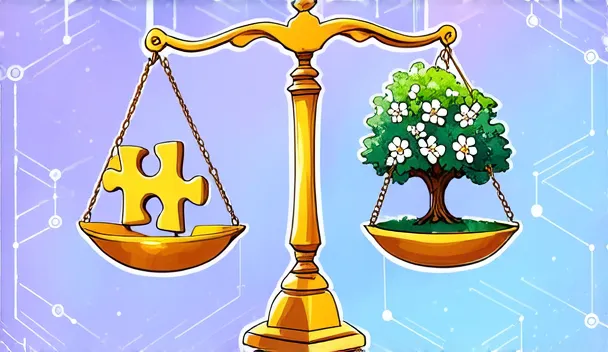
The Impact on Social Network Growth and User Experience
Implementing blockchain technology in social networks can significantly impact growth and user experience.
On one hand, the decentralized nature of blockchains allows for increased transparency, security, and control over personal data, which can attract users seeking a more private and secure online environment.
However, this comes at the cost of scalability and usability. For example, blockchain-based platforms often require users to manage their own encryption keys and wallets, which can be daunting for those without prior experience with cryptocurrencies.
This learning curve can hinder user adoption and growth, as seen in the case of decentralized social networks like Mastodon, which has struggled to scale despite its strong community features.
Balancing Control and Performance in Decentralized Networks
Decentralized networks, by their very nature, present a unique challenge when it comes to balancing control and performance. Unlike traditional social platforms that rely on centralized servers for data storage and management, blockchain-powered platforms distribute these responsibilities across a network of nodes.
This distribution can lead to slower processing times due to the need for consensus among nodes before any transaction or update is validated. However, this trade-off in speed ensures greater security, transparency, and autonomy for users.
To illustrate, consider a highway system where every driver must agree on the route before proceeding; it may take longer, but everyone's safety is ensured through collective oversight.
Usability Considerations for Blockchain-Powered Social Platforms
While blockchain technology offers a secure and transparent way to manage data, it can be challenging to balance scalability and usability in social platforms.
For instance, the complexity of cryptographic algorithms and smart contracts may lead to slower transaction processing times, potentially frustrating users who are accustomed to lightning-fast interactions on traditional social media platforms.
To mitigate this issue, developers might consider implementing off-chain transactions or leveraging second-layer scaling solutions like sharding or state channels. By doing so, they can create a seamless user experience that rivals mainstream social networks while maintaining the benefits of blockchain technology.
Navigating Regulatory Complexities: A Guide to Blockchain-Based Social Networking

Understanding Blockchain-Specific Regulations and Compliance
As social networks consider transitioning to blockchain technology, they must navigate a complex regulatory landscape.
The decentralized nature of blockchain raises unique compliance challenges, particularly with regards to data protection and user identity verification. For instance, the General Data Protection Regulation (GDPR) in the European Union requires that personal data be stored securely and that users have control over their information.
Blockchain's distributed ledger technology can facilitate secure data storage, but social networks must still implement measures to ensure compliance with GDPR and similar regulations.
This may involve partnering with blockchain providers who offer GDPR-compliant solutions or developing in-house tools to manage user data.
A Regulatory Perspective on Blockchain-Based Social Networking
Blockchain-based social networking platforms must navigate a complex regulatory landscape. This is analogous to a ship navigating through treacherous waters, where the slightest misstep can lead to catastrophic consequences.
Governments and regulatory bodies are still grappling with how to classify blockchain-based activities, leading to a patchwork of differing regulations across jurisdictions.
For instance, the European Union's General Data Protection Regulation (GDPR) has significant implications for social networking platforms, while the US Securities and Exchange Commission (SEC) has issued guidelines on the treatment of digital assets.
As the regulatory environment continues to evolve, blockchain-based social networking platforms must remain agile and adaptable to ensure compliance with shifting requirements.
Finding a Balance between Censorship Resistance and Content Moderation
As blockchain-based social networks strive to promote free speech, they must also contend with the need for content moderation. This balancing act can be likened to walking a tightrope - too much censorship can undermine the network's purpose, while too little can expose users to harm.
To navigate this complexity, platforms may adopt multi-layered approaches, such as decentralized moderation tools and community-driven guidelines. For instance, a blockchain-based social network could empower users to create and enforce their own content filters, similar to how subreddit communities manage their own content.
By adopting such hybrid models, blockchain-based social networks can foster an environment where free expression thrives while also protecting users from harm.
Conclusion
The concept of blockchain-powered social networks has been gaining traction in recent years, and it's easy to see why. By leveraging blockchain technology, social networks can prioritize user privacy, security, and decentralization, creating a more robust and transparent online community.
As we've explored throughout this article, the benefits of blockchain-based social networking are numerous, including enhanced data protection, immutable records, and community governance. However, technical hurdles such as scalability and interoperability challenges must be addressed to make these networks viable.
By understanding the mechanics of blockchain technology and navigating regulatory complexities, it's possible to create a more balanced and user-friendly platform.
As we look to the future, one thing is certain - the potential for blockchain-powered social networks to revolutionize the way we interact online is vast. Will you be a part of this groundbreaking shift?