

Archived article · Original source date: 2024-08-15
This article is preserved from the previous Solana Bulls site as a historical archive. It reflects its original context; references to products, people, market conditions, eligibility, or rules may no longer be current.
Editorial note: This article is educational and is not financial, investment, legal, or tax advice. Products, protocols, yields, fees, liquidity, regulations, and tax treatment can change; verify current primary sources and evaluate the specific risks before acting.
The scientific research landscape is ripe for disruption, as traditional models of data sharing and collaboration are showing signs of strain. Amidst this backdrop, decentralized science (DeSci) has emerged as a revolutionary force, promising to democratize access to scientific knowledge and empower researchers worldwide.
Solana, with its high-performance blockchain technology, is playing a pivotal role in shaping the future of DeSci. This blog post will delve into the principles and benefits of DeSci, the shortcomings of traditional research models, and how Solana's unique features are empowering decentralized science initiatives, enabling open access, transparency, and community engagement.
By exploring the intersection of blockchain technology and scientific collaboration, we'll examine the transformative potential of Solana in redefining research sharing and access, and discuss the key challenges that DeSci must address to realize its full potential.
Introducing DeSci: Principles, Benefits, and a New Paradigm for Research
Defining Decentralized Science (DeSci): Core Principles and Benefits
Decentralized science, or DeSci, represents a paradigm shift in the way scientific research is conducted, verified, and disseminated. At its core, DeSci is built on principles of transparency, collaboration, and community-driven innovation.
By leveraging blockchain technology, DeSci enables researchers to share data, methods, and results in an open and reproducible manner. This not only promotes the integrity and trustworthiness of scientific findings but also accelerates knowledge sharing across disciplines.
For instance, imagine a decentralized platform where scientists can collaborate on projects, access shared resources, and receive incentives for contributing valuable insights - much like how open-source software development has transformed the coding world.
By embracing DeSci, we can unlock new avenues for discovery and push the boundaries of human understanding.
From Centralized to Decentralized: A New Paradigm for Research and Innovation
The traditional research landscape has long been dominated by centralized institutions, where knowledge is controlled and disseminated through a select few.
However, the advent of blockchain technology is revolutionizing this paradigm, giving rise to decentralized science (DeSci).
Imagine a world where researchers can collaborate freely, share data openly, and receive recognition for their contributions without intermediaries controlling the narrative.
DeSci enables this vision by leveraging blockchain's inherent transparency, security, and accessibility.
By decentralizing research, we can accelerate breakthroughs, reduce duplication of effort, and make scientific progress more inclusive and equitable.
Accelerating Progress through Open Access and Community Engagement
The DeSci movement, facilitated by Solana's blockchain technology, is revolutionizing the way scientific research is conducted. By embracing open access principles, researchers can share their findings freely, unencumbered by traditional publishing barriers.
This paradigm shift enables the global community to collaborate more effectively, accelerating progress in various fields of science. The open-source software movement serves as a fitting analogy - where collaborative development led to rapid innovation and widespread adoption.
Similarly, DeSci's emphasis on community engagement will foster a culture of cooperation, encouraging researchers to build upon each other's discoveries and driving breakthroughs at an unprecedented pace.
The Shortcomings of Traditional Scientific Research Models: An In-Depth Analysis

Inefficiencies in Traditional Data Sharing and Collaboration
Traditional scientific research models rely heavily on centralized institutions, journals, and conferences to facilitate data sharing and collaboration.
However, this approach is plagued by inefficiencies that hinder the progress of scientific discovery. For instance, the peer-review process can be slow and biased, leading to delays in publishing critical findings.
Moreover, restrictive access controls and paywalls limit the dissemination of research results, making it difficult for scientists to build upon each other's work.
This creates a "needle-in-the-haystack" problem, where researchers spend more time searching for existing knowledge than contributing new insights.
The Limitations of Centralized Funding Models: Inequities and Inefficiencies
Centralized funding models have been the cornerstone of scientific research, but they come with inherent limitations. One major drawback is that decision-making power rests in the hands of a few individuals or organizations, often resulting in biased allocation of resources.
This can lead to inequitable distribution of funds, favoring established researchers over newcomers, and mainstream topics over innovative or high-risk projects. Furthermore, bureaucratic processes slow down the funding cycle, causing delays in project initiation and hindering timely responses to emerging scientific opportunities.
For instance, the COVID-19 pandemic has highlighted the need for agile research funding mechanisms that can quickly adapt to new challenges, whereas traditional models have struggled to keep pace.
Disparities in Scientific Knowledge and Resource Accessibility
The traditional scientific research model has long been plagued by disparities in access to knowledge and resources. This phenomenon is akin to a "rich get richer" scenario, where well-funded institutions and researchers from affluent nations have greater opportunities to conduct cutting-edge research, publish papers, and secure patents.
Conversely, scientists from underprivileged backgrounds or developing countries often struggle to gain access to the same level of resources, leading to a stark imbalance in scientific knowledge distribution. For instance, a researcher at a top-tier university might have unlimited access to high-performance computing facilities, while their counterpart in a resource-constrained institution may rely on outdated equipment, hindering their ability to contribute meaningfully to their field.
Solana's Role in Empowering DeSci Initiatives: Open Access, Transparency, and Community Engagement

Empowering Researchers through Democratization of Scientific Discovery
Solana's blockchain technology is poised to revolutionize the scientific research landscape by democratizing access to data, methods, and results. By leveraging Solana's decentralized network, researchers can share their findings openly, facilitating a transparent and collaborative environment that accelerates discovery.
This shift in paradigm enables junior researchers and underfunded institutions to participate on an equal footing with well-established players, fostering innovation and diversity of thought.
For instance, open-source projects like the Open Science Framework have already begun utilizing blockchain to promote reproducibility and transparency in scientific research, demonstrating the vast potential for Solana to empower a new generation of scientists.
Fostering Accountability, Efficiency, and Collaborative Problem-Solving
Solana's blockchain infrastructure enables decentralized science (DeSci) initiatives to prioritize transparency, fostering a culture of accountability among researchers. By utilizing Solana's open-source framework, DeSci projects can ensure that data is tamper-evident and publicly accessible, allowing the scientific community to verify and build upon each other's work.
This not only promotes integrity but also accelerates innovation by streamlining collaboration and reducing redundant efforts. For instance, a decentralized research platform on Solana could facilitate real-time peer review, enabling scientists to collectively tackle complex problems and arrive at solutions more efficiently than traditional methods.
Solana's Support for DeSci Initiatives: Transparency and Trust
Solana's blockchain technology empowers DeSci initiatives by fostering transparency and trust within the scientific community. By utilizing Solana's decentralized ledger, researchers can ensure that their data is tamper-evident and transparently accessible to all stakeholders.
This not only promotes collaboration but also encourages open access to scientific findings, reducing the risk of fraudulent activities and promoting the integrity of research outcomes.
For instance, the Open Researcher and Scholar (ORCID) initiative utilizes blockchain technology to create a decentralized registry for researchers, allowing them to securely manage their scholarly identity and share their work with confidence.
Key Features of Solana Enabling Widespread DeSci Adoption: Scalability, Security, Interoperability, and Low Transaction Costs
Scalability in Decentralized Science Applications: Solana's Advantages
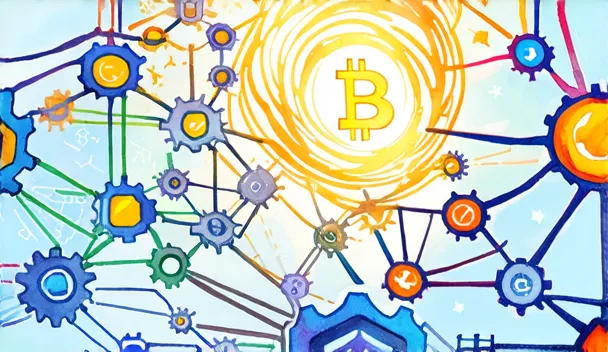
Solana's scalability features are a game-changer for decentralized science (DeSci) applications. Proof of History orders events; validators execute transactions, verify state transitions, and vote on forks through proof-of-stake consensus and Tower BFT.
This high throughput capability is crucial for DeSci use cases that require vast amounts of data to be processed and analyzed in real-time, such as genome sequencing or climate modeling. Imagine a scenario where researchers can instantly analyze large datasets from multiple sources without worrying about network congestion - this is what Solana's scalability offers.
Furthermore, Solana's scalability ensures that DeSci applications can grow without being hindered by limitations on the number of users or data they can handle.
Enhanced Security Measures for DeSci Initiatives on Solana
Solana can record signatures, hashes, permissions, and application events, but it does not make research data confidential, perform secure multi-party computation by default, or protect applications from quantum attacks. DeSci systems must select and review their own encryption, storage, access control, key management, privacy, and long-term cryptographic migration plans.
This is analogous to securing a treasure chest with multiple locks, each requiring a unique key to open - even if one lock is compromised, the others remain intact.
Unlocking Interoperability and Low Transaction Costs in DeSci Ecosystems
One of the most significant barriers to widespread adoption of decentralized science (DeSci) is the lack of interoperability between different blockchain platforms. This limitation hinders collaboration, data sharing, and innovation across various ecosystems.
Solana's architecture bridges this gap by enabling seamless interactions between different networks, much like the internet enables communication between disparate devices.
Furthermore, Solana's low transaction costs facilitate efficient data exchange and minimize the economic burden on researchers and scientists. For instance, the cost of transferring a dataset from one researcher to another can be reduced from dollars to pennies, making it more viable for large-scale collaborative projects.
Revolutionizing Scientific Collaboration: How Solana is Redefining Research Sharing and Access
A New Era of Open Access Research: Opportunities and Implications
The rise of blockchain technology, particularly Solana, is poised to revolutionize scientific collaboration by enabling a new era of open access research. By leveraging decentralized networks and smart contracts, researchers can share their findings more efficiently, transparently, and securely.
This shift has far-reaching implications for the scientific community, facilitating unprecedented levels of collaboration and accelerating breakthroughs.
For instance, imagine a researcher being able to instantly share their data with colleagues worldwide, without fear of intellectual property theft or censorship. Solana's blockchain enables this vision, fostering an environment where scientists can focus on solving complex problems rather than navigating bureaucratic hurdles.
Transparent Funding Models in Decentralized Science Initiatives
The rise of decentralized science initiatives on Solana has given birth to a new era of transparent funding models. Unlike traditional grant-based systems, where funding decisions are often opaque and influenced by personal connections, decentralized platforms enable open and community-driven fundraising processes.
This shift promotes accountability and ensures that resources are allocated based on scientific merit rather than favoritism or biases. For instance, the use of Decentralized Autonomous Organizations (DAOs) allows researchers to propose projects and receive funding directly from a community of peers, fostering a more democratic and transparent approach to scientific resource allocation.
Empowering Researchers with Solana's Scalable Infrastructure for Data Sharing
Solana's scalable infrastructure enables researchers to share and access large datasets, facilitating seamless collaboration across the scientific community.
This decentralized approach eliminates data silos, allowing scientists to build upon existing research without worrying about storage limitations or accessibility issues.
Imagine a world where researchers can instantly share complex genomic data or climate models with colleagues worldwide, promoting accelerated discovery and breakthroughs in various fields.
Solana's blockchain technology ensures that sensitive information remains secure, tamper-evident, and transparent - fostering trust among collaborators and accelerating the pace of scientific progress.
Addressing Challenges in DeSci: Regulatory Frameworks, Data Quality, and Participation Incentives

Navigating Regulatory Frameworks for DeSci Initiatives
Regulatory frameworks can be a significant hurdle in decentralized science (DeSci) initiatives, as they often struggle to balance the need for oversight with the inherent decentralization of blockchain technology. Akin to navigating an uncharted sea, DeSci projects must carefully chart their course through existing regulatory landscapes to avoid treacherous waters.
For instance, the European Union's General Data Protection Regulation (GDPR) presents a unique challenge for DeSci initiatives handling sensitive research data. By establishing clear guidelines and standards for data protection, GDPR sets a high bar for DeSci projects seeking to operate within its jurisdiction.
To successfully navigate these regulatory frameworks, DeSci initiatives must develop innovative solutions that prioritize transparency, security, and compliance.
Ensuring Data Quality, Integrity, and Reliability in Decentralized Research
Decentralized science relies heavily on high-quality data to produce meaningful insights. However, the lack of centralized control can make it challenging to ensure data integrity and reliability.
To address this issue, Solana's blockchain technology incorporates robust quality control mechanisms that incentivize contributors to provide accurate and reliable data.
For instance, a reputation system can be implemented, where researchers are rewarded for submitting high-quality data and penalized for low-quality submissions. This approach encourages participants to prioritize data accuracy, much like how a professor verifies the authenticity of research papers submitted by students.
Incentivizing Participation and Collaboration in DeSci Ecosystems
To unlock the full potential of decentralized science (DeSci), it's essential to incentivize participation and collaboration across various stakeholders, from researchers and scientists to developers and community members.
This can be achieved through token-based economies, where contributors are rewarded with native tokens for their efforts, such as data curation, research validation, or community moderation.
For instance, decentralized platforms like Aragon and Gitcoin have successfully harnessed the power of token-based incentives to foster collaboration and participation in their ecosystems.
By implementing similar models, DeSci projects can create a self-sustaining environment where stakeholders are motivated to contribute, ultimately driving innovation and advancement in the field.
Conclusion
In this exploration of decentralized science (DeSci), we've delved into the principles, benefits, and shortcomings of traditional scientific research models. We've also examined how Solana is playing a pivotal role in empowering DeSci initiatives through open access, transparency, and community engagement.
By leveraging Solana's scalable, secure, interoperable, and low-cost features, DeSci can revolutionize scientific collaboration and redefine research sharing and access. While challenges such as regulatory frameworks, data quality, and participation incentives remain, the potential for decentralized science to accelerate progress and democratize scientific discovery is vast.
As we look to the future, it's clear that Solana will continue to shape the landscape of DeSci, fostering a new era of open, collaborative, and community-driven research.