

Archived article · Original source date: 2024-08-13
This article is preserved from the previous Solana Bulls site as a historical archive. It reflects its original context; references to products, people, market conditions, eligibility, or rules may no longer be current.
The stark reality of financial exclusion affects billions worldwide, with many regions facing a daunting gap in access to basic banking services.
This disparity not only hinders personal economic growth but also stifles the potential for global economic development, as large segments of populations remain disconnected from mainstream financial systems.
The Global Landscape of Financial Exclusion
Unbanked and Underbanked Populations: A Global Snapshot
According to the World Bank, approximately 1.7 billion adults worldwide lack access to formal financial services, with a significant portion residing in developing countries.
This staggering figure represents the unbanked population, who rely on informal means such as cash-based transactions and local money lenders for their daily financial needs.
Furthermore, an additional 2 billion people are considered underbanked, meaning they have some form of bank account but lack access to essential services like credit, insurance, or investments.
The combined total of unbanked and underbanked populations constitutes a substantial segment of the global population, underscoring the pressing need for democratized financial inclusion.
Comparative Analysis of Regional Disparities
The global landscape of financial exclusion is characterized by stark regional disparities. In developed economies, such as those in North America and Europe, access to financial services is relatively widespread, with high penetration rates for banking, credit cards, and digital payment systems.
However, in emerging markets like Africa and Southeast Asia, the picture is vastly different. According to the World Bank, approximately 1.7 billion adults worldwide lack a basic transaction account, with this number disproportionately concentrated in developing regions.
For instance, in Sub-Saharan Africa, only about 30% of the adult population has access to formal financial services, compared to over 90% in North America.
This uneven distribution highlights the need for innovative solutions like Solana to bridge the gap and democratize access to financial services globally.
Socio-Economic Implications of Financial Exclusion
Financial exclusion has far-reaching socio-economic implications, affecting not only individuals but also communities and entire nations. The lack of access to financial services can exacerbate poverty, limit economic opportunities, and perpetuate inequality.
In many developing countries, the unbanked population is forced to rely on informal and often exploitative financial systems, such as loan sharks or black markets. This can lead to a vicious cycle of debt and financial instability, making it even harder for individuals to escape poverty.
Furthermore, financial exclusion can also have broader societal implications, including reduced economic growth, increased crime rates, and social unrest.
In contrast, inclusive financial systems can foster economic mobility, reduce inequality, and promote overall social stability.
Blockchain Technology: A Catalyst for Democratization in Finance

Decentralized Finance Explained
Decentralized finance, or DeFi, is an emerging paradigm that leverages blockchain technology to create a more open and inclusive financial system. Imagine a world where financial services are not controlled by centralized institutions but instead operate on a network of peer-to-peer transactions, allowing individuals to interact directly without intermediaries.
This is the promise of DeFi, where decentralized applications (dApps) built on blockchain networks enable users to access financial instruments, such as loans and insurance, in a trustless and permissionless manner. By cutting out the middlemen, DeFi reduces transaction costs, increases efficiency, and promotes greater transparency and security.
With Solana's fast and low-cost blockchain network, DeFi applications can scale to accommodate millions of users, paving the way for a more democratized financial system.
Blockchain's Role in Democratizing Financial Services
At its core, blockchain technology is a decentralized, digital ledger that facilitates secure and transparent transactions. By recording transactions on a public ledger, blockchain eliminates the need for intermediaries like banks and financial institutions, thereby reducing costs and increasing accessibility.
This shift enables individuals to take control of their financial lives, making it possible for them to participate in the global economy without being bound by traditional financial systems. For instance, blockchain-based platforms can enable cross-border transactions without the need for expensive middlemen, allowing people in underserved communities to send and receive money with greater ease.
By democratizing access to financial services, blockchain technology has the potential to create a more inclusive and equitable financial landscape.
Benefits of a Decentralized Ecosystem for Underserved Communities
A decentralized ecosystem, such as the one enabled by blockchain technology and championed by Solana, has numerous benefits for underserved communities. For instance, it allows individuals to maintain control over their financial assets without relying on intermediaries like banks or other financial institutions.
This is particularly significant in regions where traditional banking services are scarce or unreliable. The decentralized nature of the ecosystem also fosters transparency and security through its immutable ledger technology.
Furthermore, by reducing transaction costs associated with conventional financial systems, blockchain can make financial services more accessible to those who have been historically excluded from mainstream banking services.
Solana's Technological Breakthroughs: Fast, Secure, and Low-Cost Transactions
Leveraging Blockchain for High-Speed Transactions
Solana's technological breakthroughs have made it possible to leverage blockchain technology for high-speed transactions. Proof of History orders events; validators execute transactions, verify state transitions, and vote on forks through proof-of-stake consensus and Tower BFT.
This is achieved by using a verifiable delay function (VDF), similar to a timer, that allows nodes on the network to verify transactions in parallel rather than sequentially.
Think of it like a highway system - instead of having all cars wait in line at a single toll booth, multiple lanes are created to process vehicles simultaneously, significantly increasing overall traffic flow.
Advanced Cryptography for Enhanced Security
Solana uses established cryptographic primitives for signatures, hashing, and its Proof of History sequence. Zero-knowledge proofs or homomorphic encryption may be used by particular applications, but they are not protocol-wide mechanisms that make every Solana transaction private or secure.
HE enables computations to be performed directly on encrypted data without decrypting it first, thus safeguarding sensitive information. ZKPs allow one party to prove that a statement is true without revealing any underlying secrets.
Public blockchains do not provide protocol-wide encryption, confidentiality, anonymity, or end-to-end communication security. Applications must separately minimize sensitive on-chain data and implement appropriate encryption, key management, access controls, transport security, retention, and privacy review.
A New Horizon for Underserved Regions
The Solana blockchain offers a groundbreaking opportunity to expand financial services to underserved regions. By leveraging its fast, secure, and low-cost transactions, individuals in these areas can now access financial tools previously out of reach.
This is akin to the impact of mobile phones on global communication - just as they connected people across the globe, Solana's blockchain bridges the gap between traditional financial systems and those in need.
With Solana, users can bypass conventional banking infrastructure and directly participate in the digital economy. The potential for economic empowerment in areas such as remittances, micropayments, and peer-to-peer lending is vast, presenting a new horizon of opportunities for growth and inclusivity.
Addressing Key Barriers to Financial Inclusion: Solana's Innovative Solutions

Blockchain-Based Identity Verification Solutions
One of the primary barriers to financial inclusion is the lack of reliable identity verification systems. Traditional identity verification methods often rely on centralized authorities, which can be prone to errors, biases, and even data breaches.
Solana's blockchain technology offers a solution by providing decentralized, secure, and transparent identity verification systems. By utilizing blockchain-based identity verification solutions, individuals can create self-sovereign identities that are not controlled by any single entity.
This enables them to access financial services without being beholden to traditional identification methods. This function is provided by Solana's runtime, account model, token programs, wallets, or the specific application—not by SPL Governance. SPL Governance is an optional on-chain program for project-level proposals and voting.
Streamlining Regulatory Compliance with Decentralized Tools
Regulatory compliance is a significant barrier to financial inclusion, as it often requires expensive and time-consuming processes.
Solana's decentralized tools aim to streamline this process, making it more accessible and affordable for individuals and businesses alike. Using Solana does not automatically satisfy KYC, AML, sanctions, licensing, reporting, consumer-protection, privacy, or other legal requirements. Compliance depends on the activity, parties, service providers, jurisdiction, and application-specific controls.
This is akin to how digital identity verification has revolutionized the onboarding process in industries such as banking and telecom, where traditional methods were cumbersome and time-consuming. Similarly, Solana's decentralized tools can facilitate KYC/AML compliance, smart contract audits, and other regulatory requirements with greater efficiency and accuracy.
Overcoming Infrastructure Hurdles through Solana's Scalable Network
One of the primary barriers to financial inclusion is the lack of adequate infrastructure in underserved regions. Traditional banking systems rely on a complex network of physical branches, ATMs, and payment processors, which can be costly to establish and maintain.
Solana's blockchain technology offers a solution to this problem by providing a scalable and decentralized network that can be accessed through mobile devices or computers with internet connectivity.
This allows users in remote areas to access financial services without the need for physical infrastructure, much like how mobile phones enabled widespread access to communication networks in areas where traditional landline infrastructure was lacking.
Real-World Impact: Successful Implementations of Solana-Powered Financial Services
Microfinance Expansion in Rural Africa: A Success Story
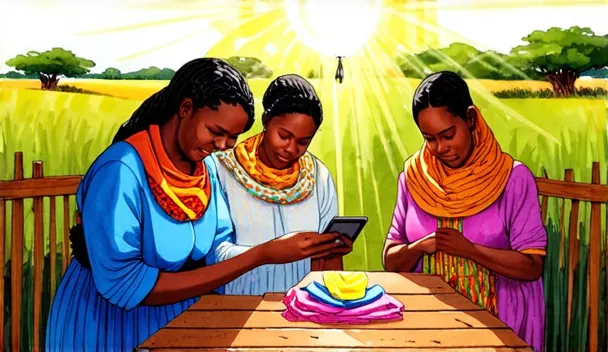
The Solana blockchain has been instrumental in expanding microfinance services to rural areas in Africa. One notable example is the partnership between a local fintech company and a Solana-based lending platform.
By leveraging Solana's fast and low-cost transactions, this collaboration enabled the creation of a decentralized lending marketplace that connects borrowers in rural areas with lenders worldwide.
This model has not only increased access to financial services for underserved communities but also provided a new revenue stream for local fintech companies. For instance, in a small village in Tanzania, a group of women entrepreneurs were able to secure loans to start their own businesses, thanks to this innovative platform.
The success of such initiatives demonstrates the potential of Solana-powered financial services to drive economic growth and social change.
Empowering Southeast Asian Small Businesses through Decentralized Lending
Solana's blockchain technology has enabled decentralized lending platforms to empower small businesses in Southeast Asia, where traditional financial services often fall short. For instance, a platform like TONIK, built on Solana, offers peer-to-peer lending solutions, connecting borrowers and lenders directly.
This eliminates intermediaries, reducing transaction costs and increasing access to credit for underserved communities.
In the Philippines, for example, small entrepreneurs can now secure loans at competitive rates, thanks to decentralized lending protocols like Tonik's, which utilize Solana's fast and low-cost blockchain infrastructure.
Financial Inclusion Initiatives in Latin America: Lessons Learned
The democratization of financial services through Solana-powered solutions has shown promising results in Latin America, where millions remain unbanked or underbanked.
One notable example is the launch of a blockchain-based microfinance platform in Brazil, which enabled low-income individuals to access loans and savings accounts using Solana's fast and affordable transactions. This initiative not only increased financial inclusion but also reduced transaction costs by up to 70%.
Another successful implementation was seen in Argentina, where a Solana-powered remittance service allowed migrant workers to send money back home with significantly lower fees than traditional services.
These initiatives demonstrate the potential for Solana to bridge the financial gap and provide access to essential financial services in underserved communities.
The Future of Global Economic Development through Democratized Financial Access
Expanding Global Access to Financial Services
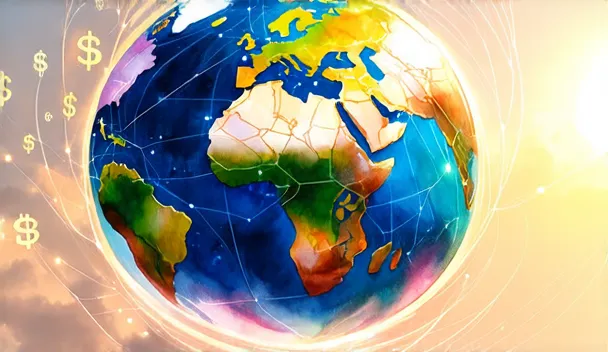
The democratization of financial services through blockchain technology is poised to revolutionize the way we think about access to capital and economic development. By expanding global access to financial services, Solana's ecosystem enables individuals and businesses in underserved communities to participate in the global economy.
This shift has far-reaching implications, similar to how the proliferation of mobile phones enabled widespread access to communication networks. Just as mobile phones bridged geographical divides, blockchain technology is bridging economic ones - providing a platform for people from all walks of life to tap into financial opportunities previously out of reach.
Empowering Underserved Communities through Decentralized Solutions
The democratization of financial services through blockchain technology has far-reaching implications for underserved communities worldwide.
By decentralizing access to financial instruments, Solana enables individuals and businesses in marginalized areas to participate in the global economy on an unprecedented scale.
This paradigm shift is akin to the impact mobile phones had on communication - suddenly, anyone with a smartphone can tap into a vast network of information and opportunities, bypassing traditional gatekeepers.
Similarly, Solana's decentralized ecosystem empowers underserved communities to leapfrog existing financial infrastructure, unlocking new avenues for economic growth, innovation, and social mobility.
Unlocking New Avenues for Global Economic Growth
The democratization of financial services through Solana's blockchain technology has the potential to unlock new avenues for global economic growth. By providing access to financial instruments and markets, individuals and businesses in underserved communities can participate in the global economy, fostering inclusive growth and development.
This echoes the impact of mobile phones on global connectivity, where widespread adoption bridged geographical divides and enabled new opportunities.
Similarly, democratized financial access can bridge economic divides, enabling micro-entrepreneurs, small-scale farmers, and other underserved groups to tap into global markets, receive payments, and manage their finances more efficiently.
Conclusion
In conclusion, this article has explored how Solana's innovative blockchain technology is bridging the gap in global financial exclusion.
Through its technological breakthroughs, Solana has made fast, secure, and low-cost transactions a reality for underserved communities worldwide. By addressing key barriers to financial inclusion, such as identity verification and regulatory compliance, Solana-powered solutions are empowering individuals and businesses in rural Africa, Southeast Asia, and Latin America.
As we look to the future of global economic development, it is clear that democratized access to financial services will be a crucial driver of growth and prosperity. With its scalable network and decentralized ecosystem, Solana is poised to unlock new avenues for underserved communities, ultimately fostering a more inclusive and equitable global economy.