

Archived article · Original source date: 2024-08-19
This article is preserved from the previous Solana Bulls site as a historical archive. It reflects its original context; references to products, people, market conditions, eligibility, or rules may no longer be current.
However, traditional centralized AI computing architectures are increasingly facing significant challenges in terms of scalability, security, and cost. As the demand for more sophisticated and decentralized AI applications grows, the need for a new paradigm that can overcome these limitations has become pressing.
Overcoming Centralized AI Computing Limitations: Scalability, Security, and Cost Challenges
Scalability Challenges in Traditional AI Computing Architectures
Traditional centralized AI computing architectures are increasingly facing significant scalability challenges. As AI models grow more complex and demanding, the need for massive computational resources has become a major bottleneck.
The reliance on cloud services for compute power can be costly and inefficient, leading to increased latency and decreased performance. Furthermore, the environmental impact of powering these large-scale data centers is becoming a growing concern.
For instance, training a single AI model can consume as much electricity as an entire city, making it clear that traditional computing architectures are unsustainable in the long term.
Security Risks Associated with Centralized AI Data Storage and Processing
The reliance on centralized infrastructure for AI data storage and processing poses significant security risks. When AI models are trained and deployed in a centralized manner, sensitive data is concentrated in a single point of failure, making it an attractive target for cyberattacks.
Moreover, the increasing complexity of AI systems creates more vulnerabilities that can be exploited by malicious actors. For instance, a breach in a centralized AI system could lead to unauthorized access to sensitive information, compromising intellectual property and putting businesses at risk.
Furthermore, relying on centralized data storage also raises concerns about data sovereignty, as companies may not have full control over their data and its usage.
High Costs of Maintaining Large-Scale AI Compute Infrastructure
The maintenance of large-scale AI compute infrastructure poses significant financial burdens on organizations. The costs associated with purchasing, powering, and cooling high-performance hardware are substantial, often resulting in expenses that rival the acquisition costs themselves.
For instance, a single high-end GPU can consume up to 250 watts of power, leading to considerable electricity bills over time.
Furthermore, as AI models become increasingly complex, they require more powerful hardware, which not only increases upfront costs but also amplifies cooling and maintenance expenditures.
Solana's Blockchain Architecture: Core Features, Capabilities, and Advantages for Decentralized AI

Understanding Solana's Proof of History ordering clock
Solana's blockchain architecture is built around its innovative Proof of History (PoH) ordering clock. Proof of History orders events; validators execute transactions, verify state transitions, and vote on forks through proof-of-stake consensus and Tower BFT.
By utilizing this method, Solana can achieve higher scalability and lower latency while maintaining a high level of security.
This makes it an attractive option for decentralized AI applications, where rapid data processing and low transaction costs are crucial.
Solana's Scalability and Performance Capabilities for Decentralized AI Applications
Solana's blockchain architecture is uniquely positioned to address the scalability and performance challenges facing decentralized AI applications. By leveraging Solana's high-performance capabilities, decentralized AI projects can tap into a scalable and efficient infrastructure that supports their growing demands.
For instance, Nosana's decentralized GPU grid and Kuzco's distributed GPU cluster demonstrate how Solana's blockchain technology can be harnessed to create cost-effective and environmentally friendly alternatives to traditional cloud services for AI inference workloads.
How Solana's Architecture Enables Distributed AI Compute Networks
Solana's blockchain architecture is uniquely positioned to enable distributed AI compute networks by providing a scalable, secure, and cost-effective infrastructure for decentralized applications.
At its core, Solana's design principles prioritize decentralization, openness, and composability - essential characteristics for fostering a robust ecosystem of interconnected AI services.
By leveraging Solana's high-performance capabilities and low-latency consensus algorithm, developers can create distributed AI networks that not only rival traditional cloud services in terms of scalability but also offer enhanced security features and reduced costs.
Enabling Distributed AI Processing on Solana: Overcoming Centralized Limitations with Decentralized Compute Networks

Leveraging Solana's Blockchain for Distributed AI Processing and Overcoming Centralized Limitations
Solana's blockchain architecture provides a robust foundation for decentralized AI applications, enabling them to overcome the scalability, security, and cost challenges associated with traditional centralized computing architectures.
For instance, projects like Nosana and Kuzco are already harnessing Solana's high-performance capabilities to provide scalable and efficient solutions for AI inference workloads.
These initiatives not only demonstrate the potential of decentralized AI processing but also highlight the critical role Solana plays in fostering a robust ecosystem of interconnected AI services.
Enabling Scalable and Secure AI Compute Across a Global Node Network
The Solana blockchain serves as an ideal foundation for decentralized AI applications, offering a scalable and secure infrastructure that can efficiently process vast amounts of data across a global node network. By leveraging Solana's high-performance capabilities, developers can create distributed AI networks that not only rival traditional cloud services in terms of scalability but also offer enhanced security features and reduced costs.
For instance, companies like Nosana and Kuzco are pioneering the use of decentralized GPU resources for AI inference workloads, providing a cost-effective alternative to traditional cloud services while reducing computational costs by up to 85%. This approach not only supports the AI revolution but also presents an environmentally friendly option by leveraging underutilized hardware worldwide.
Benefits of Decentralized Compute Networks for AI Applications
Decentralized compute networks offer a multitude of benefits for AI applications, addressing the scalability, security, and cost challenges inherent in traditional centralized computing architectures.
By harnessing the collective power of distributed nodes, decentralized networks can provide scalable and efficient infrastructure that supports the growing demands of complex AI models.
This not only reduces reliance on costly cloud services but also promotes environmental sustainability by leveraging underutilized hardware worldwide.
Key Components of a Decentralized AI Compute Network on Solana: Node Architecture, Validator Roles, and Data Storage Solutions

Designing Efficient Compute Node Clusters for Scalable AI Processing on Solana
Designing efficient compute node clusters is crucial for scalable AI processing on the Solana blockchain.
This involves strategically configuring and interconnecting nodes to maximize computational power while minimizing latency and costs.
Ensuring Consensus, Security, and Data Integrity in Decentralized AI Compute Networks
To ensure the integrity and reliability of decentralized AI compute networks on Solana, it's crucial to maintain a robust consensus mechanism.
This is where Solana's Proof of History (PoH) ordering clock plays a vital role.
This approach not only enhances the security of the network but also promotes scalability and lower latency.
Furthermore, decentralized AI compute networks on Solana can leverage validator roles to ensure data integrity.
Validators are responsible for processing and verifying transactions, making them critical in maintaining the accuracy and consistency of data across the network.
By distributing validation tasks among a diverse set of validators, decentralized AI applications can minimize the risk of data corruption or manipulation.
In terms of data storage solutions, Solana's ecosystem offers several innovative options that prioritize security and decentralization.
For instance, Shadow Drive provides a decentralized object storage solution tailored for Web3 builders, ensuring fast and scalable data storage without compromising on security.
By integrating such solutions into decentralized AI compute networks, developers can ensure the integrity and security of sensitive AI model data.
This not only supports the development of scalable and secure AI applications but also fosters a trusted ecosystem where users can confidently participate and contribute their resources.
Balancing Performance, Cost, and Security in Decentralized AI Networks
Decentralized AI networks, powered by Solana's blockchain technology, offer a compelling solution to the scalability, security, and cost challenges inherent in traditional centralized computing architectures.
To achieve optimal performance in these networks, it is crucial to balance three key factors: performance, cost, and security. Performance refers to the network's ability to efficiently process vast amounts of data, while cost pertains to the financial burden associated with maintaining large-scale AI compute infrastructure.
Security, on the other hand, concerns the protection of sensitive data from unauthorized access or malicious actors.
Benefits of Using Solana for Decentralized AI Compute Networks: Scalability, Security, and Cost Advantages

Enhanced Scalability through Solana's Blockchain Architecture for Decentralized AI
Solana's blockchain architecture is uniquely positioned to address the scalability challenges facing decentralized AI applications. By leveraging its high-performance capabilities, developers can create distributed AI networks that not only rival traditional cloud services in terms of scalability but also offer enhanced security features and reduced costs.
This is particularly evident in projects such as Nosana and Kuzco, which are pioneering the use of decentralized GPU resources for AI inference workloads. These initiatives demonstrate how Solana's blockchain technology can be harnessed to create cost-effective and environmentally friendly alternatives to traditional cloud services, thereby supporting the development of scalable and secure AI applications.
Improved Security Measures for Decentralized AI Compute Networks on Solana
The decentralized nature of Solana's blockchain technology inherently provides several security benefits for AI compute networks.
By distributing data processing and storage across a network of nodes, the risk of a single point of failure or attack is significantly mitigated.
Shadow Drive provides decentralized object-storage infrastructure, but storage distribution does not by itself establish encryption, confidentiality, integrity, availability, data sovereignty, or legal compliance. Verify its current replication, payment, access, encryption, deletion, and recovery model for the specific application.
This ensures that sensitive information is protected from unauthorized access or malicious actors, promoting a trusted ecosystem where users can confidently participate and contribute their resources.
Reduced Costs and Increased Efficiency in AI Processing with Solana
The integration of Solana's blockchain technology into decentralized AI compute networks offers a compelling solution to the cost challenges inherent in traditional centralized computing architectures.
For instance, projects like Nosana and Kuzco are already harnessing Solana's capabilities to provide scalable and efficient solutions for AI inference workloads, reducing computational costs by up to 85%.
Technical Requirements for Building a Decentralized AI Compute Network on Solana: Smart Contract Development, API Integration, and Node Management Strategies
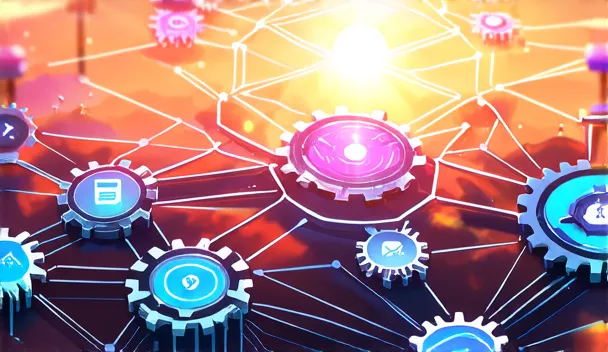
Designing Efficient Decentralized AI Compute Protocols and Smart Contracts
Efficient decentralized AI compute protocols are crucial in enabling scalable, secure, and cost-effective AI applications on Solana.
This involves designing smart contracts that not only optimize computational resources but also ensure data integrity and security across the network.
By leveraging Solana's high-performance capabilities, developers can create distributed AI networks that offer unparalleled scalability, security, and efficiency.
A key aspect of efficient decentralized AI compute protocols is the ability to balance performance with cost.
This requires strategically configuring node clusters to maximize computational power while minimizing latency and costs.
Smart contracts play a vital role in maintaining the integrity and security of decentralized AI compute networks on Solana. By leveraging validator roles to ensure data accuracy and consistency across the network, developers can minimize the risk of data corruption or manipulation.
Examples such as Nosana and Kuzco demonstrate how efficient decentralized AI compute protocols can be achieved on Solana.
By harnessing the collective power of distributed nodes, these networks provide scalable and efficient infrastructure that supports the growing demands of complex AI models.
API Integration Strategies for Seamless Node Interaction and Data Exchange
Effective API integration is crucial for decentralized AI compute networks on Solana, enabling seamless node interaction and data exchange.
This involves strategically designing APIs that facilitate efficient communication between nodes, ensuring that data is processed and exchanged in a secure and scalable manner.
By leveraging standardized API protocols, developers can create interoperable systems that promote flexibility and adaptability within the network.
A key aspect of API integration in Solana-based decentralized AI networks is the use of Web3 technologies such as JSON-RPC and gRPC.
These protocols enable nodes to communicate efficiently, supporting the rapid exchange of data and ensuring low latency.
Additionally, APIs can be designed to support multi-language compatibility, allowing developers to build applications using their preferred programming languages.
Projects like Nosana and Kuzco have already demonstrated the potential of API integration in decentralized AI compute networks on Solana.
By providing OpenAI-compatible APIs for large language model inference, these platforms showcase how seamless node interaction and data exchange can be achieved through strategic API design.
This approach not only enhances scalability but also promotes a more efficient use of computational resources within the network.
Node Management Techniques for Scalable, Secure, and Reliable Decentralized AI Networks
Effective node management is crucial for maintaining the scalability, security, and reliability of decentralized AI networks on Solana.
A well-designed node architecture can significantly enhance the performance of decentralized AI applications by ensuring efficient data processing, storage, and communication among nodes.
Ensuring Performance, Reliability, and Security in Decentralized AI Compute Networks: Strategies for Overcoming Technical Challenges

Optimizing Network Architecture for Scalable Decentralized AI Compute on Solana
To ensure the scalability, security, and cost-effectiveness of decentralized AI compute networks on Solana, optimizing network architecture is crucial. This involves strategically designing node clusters to maximize computational power while minimizing latency and costs.
Leveraging Solana's Blockchain to Ensure Data Integrity, Security, and Reliability
Solana's blockchain architecture provides a robust foundation for ensuring data integrity, security, and reliability in decentralized AI compute networks.
Mitigating Node Variability for Reliable Distributed AI Processing on Solana
Ensuring reliable distributed AI processing on Solana's blockchain network requires mitigating node variability, a critical challenge in decentralized systems.
Node variability arises from the differences in computational power, latency, and availability among participating nodes, which can significantly impact the overall performance and security of the network.
To address this issue, developers can employ various strategies to standardize node behavior and promote a more uniform distribution of tasks across the network.
One potential approach involves implementing a node scoring system that evaluates each node's performance based on its contribution to the network, such as processing speed, reliability, and latency. This score can then be used to allocate tasks more efficiently, prioritizing nodes with higher scores for critical or time-sensitive computations.
By incentivizing high-performing nodes through rewards or increased participation in the network, developers can foster a more competitive environment that drives overall network performance.
Another strategy is to utilize node clustering techniques, where nodes are grouped based on their computational capabilities and latency profiles.
This allows for more efficient task allocation, as tasks requiring specific levels of processing power or low latency can be directed to the most suitable clusters.
By minimizing variability within each cluster, developers can optimize network performance and ensure more reliable distributed AI processing.
Finally, implementing robust error detection and correction mechanisms is crucial in managing node variability.
These mechanisms enable the network to quickly identify and respond to node failures or inconsistencies, ensuring that tasks are re-routed to available nodes with minimal disruption to overall processing.
By combining these strategies, developers can effectively mitigate node variability and create a more reliable and efficient distributed AI processing environment on Solana.
Conclusion
In this article, we explored how Solana's blockchain technology can be leveraged to power decentralized AI compute networks.
We discussed the limitations of traditional centralized AI computing architectures and how Solana's scalability, security, and cost advantages can overcome these challenges.
We also delved into the core features and capabilities of Solana's blockchain architecture, enabling distributed AI processing and decentralized compute networks.
Additionally, we examined key components of a decentralized AI compute network on Solana, such as node architecture, validator roles, and data storage solutions, and discussed technical requirements for building such networks.
By utilizing Solana's blockchain, developers can create scalable, secure, and cost-efficient decentralized AI compute networks, paving the way for innovative applications in various industries.