

Archived article · Original source date: 2024-08-25
This article is preserved from the previous Solana Bulls site as a historical archive. It reflects its original context; references to products, people, market conditions, eligibility, or rules may no longer be current.
Editorial note: This article is educational and is not financial, investment, legal, or tax advice. Products, protocols, yields, fees, liquidity, regulations, and tax treatment can change; verify current primary sources and evaluate the specific risks before acting.
Solana stands out with its unique blend of speed, scalability, and security, making it an attractive choice for building DApps.
This blog post will delve into Solana's technical capabilities, cost efficiency, and developer ecosystem, exploring key features and tools that make it a compelling option for DApp developers.
Introduction to Solana's Ecosystem for DApp Developers
What is Solana and its Role in the DApp Ecosystem
Solana is a blockchain platform designed to support high-performance decentralized applications (DApps). Proof of History orders events; validators execute transactions, verify state transitions, and vote on forks through proof-of-stake consensus and Tower BFT.
As a result, it has become an attractive choice for DApp developers seeking to build innovative projects. The ecosystem has grown significantly, with companies like Helius providing comprehensive development tools tailored specifically for the Solana blockchain.
Key Features and Tools for DApp Development on Solana
Developers can leverage a robust ecosystem of tools designed to streamline their development process.
For example, Helius offers high-performance RPC nodes, webhooks, APIs, and other tooling engineered to address common blockchain infrastructure challenges. Additionally, platforms like Hello Moon provide real-time data feeds, no-code datastream builders, and flexible delivery methods for NFT and DeFi analytics.
Understanding Solana's Approach to Scalability and Security
This innovative design enables the network to process a high volume of transactions per second while maintaining a secure and decentralized architecture.
Solana also utilizes parallel processing and its Sealevel runtime environment to ensure efficient smart contract execution, enhancing the platform's scalability and performance.
Solana's Technical Capabilities: A Deep Dive into Speed, Scalability, and Performance

Solana's Block Structure and Validation Process Explained
Solana's block structure is designed for fast, secure, and scalable transactions. Each block contains a set of instructions or "transactions" verified by validators before being added to the chain.
How Proof of History (PoH) ordering clock Boosts Performance
This time-based consensus algorithm processes a high volume of transactions per second without sacrificing decentralization or security, making it more efficient and less resource-intensive than traditional algorithms.
Unlocking Horizontal Scaling Capabilities on Solana
Solana's architecture unlocks horizontal scaling capabilities for developers, allowing them to scale applications without sacrificing decentralization or security.
Cost Efficiency Analysis: How Solana Stacks Up Against Other Blockchain Platforms
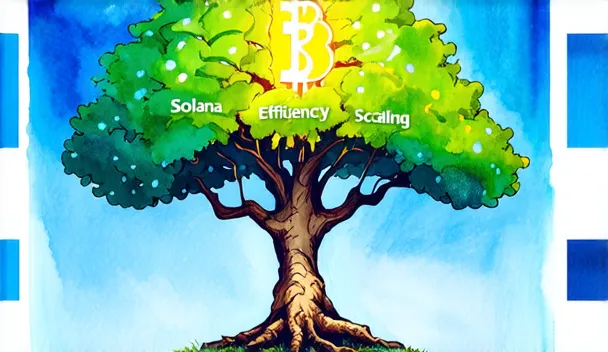
Comparing Solana to Ethereum and Binance Smart Chain: A Cost Analysis
Evaluating blockchain platforms for DApp development requires considering cost efficiency.
Solana's unique consensus algorithm and architecture enable fast, secure, and scalable transactions at a lower cost than major players like Ethereum and Binance Smart Chain.
Proof of History is a verifiable ordering clock, not an alternative to proof-of-stake or the sole source of Solana's energy profile. Network energy use depends on validator hardware, client software, traffic, and operations; Solana does not use proof-of-work mining for consensus.
Computational Resource Allocation: A Key Differentiator
Solana's innovative approach to computational resource allocation sets it apart from other blockchain platforms.
Proof of History provides a verifiable ordering clock. Transaction execution, state validation, fork choice, and security depend on proof-of-stake validators, Tower BFT, the runtime, client implementations, and application-specific controls.
On-Chain vs Off-Chain Solutions: Choosing the Best Approach for DApps
When building DApps on Solana, developers must decide between on-chain and off-chain solutions.
On-chain solutions offer unparalleled security and decentralization benefits by executing smart contracts directly on the Solana blockchain. However, they can be more expensive due to transaction costs and computational resource limitations.
Crafting an Engaging User Experience on Solana: Strategies for DApp Adoption and Success

Designing User Interfaces for Seamless Navigation and Engagement
To create engaging user experiences on Solana, developers should prioritize designing intuitive interfaces that enhance usability and drive adoption. By leveraging Solana's robust ecosystem of developer tools, such as Helius' high-performance RPC nodes and APIs, developers can build fast and reliable applications.
Additionally, Hello Moon's real-time data feeds and no-code datastream builder enable the integration of dynamic analytics and visualizations, making it easier for users to navigate and interact with the application.
Leveraging Solana's High-Speed Transaction Processing for Enhanced Performance
Proof of History supplies a verifiable ordering clock. Parallel execution comes from the account-access model and runtime scheduling of transactions that do not contend for the same writable accounts.
This feature enables fast transaction settlement times, seamless interaction with on-chain data, and responsive application interfaces.
Creating Customizable Smart Contract Solutions to Boost DApp Adoption
Developers can boost DApp adoption by creating customizable smart contract solutions that cater to specific user needs.
By leveraging tools and features from platforms like Helius and Hello Moon, developers can craft scalable applications without worrying about Solana's underlying architecture.
Ensuring Security and Decentralization in Solana: A Secure Environment for DApps
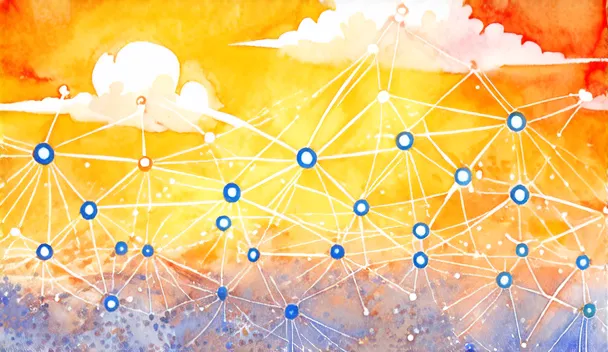
A Decentralized Approach to Validation: How Solana Enhances Security
Solana's decentralized validation approach ensures a resilient and trustworthy network, preventing single points of failure and maintaining blockchain integrity.
Solana's Architecture and its Impact on DApp Security
Solana's architecture plays a pivotal role in securing decentralized applications (DApps).
The impact of Solana's architecture on DApp security is multifaceted.
Parallel processing and the Sealevel runtime environment ensure efficient smart contract execution, reducing potential vulnerabilities and bugs. Fast transaction settlement times also make it more difficult for malicious actors to exploit security loopholes.
Developer tools like Helius and Hello Moon support Solana's ecosystem, empowering developers to create scalable and secure DApps without worrying about the underlying architecture.
These tools provide features such as high-performance RPC nodes, APIs, real-time data feeds, and no-code datastream builders for fast and reliable data fetching and on-chain activity insights.
Real-World Examples of Secure DApp Development on Solana
Solana's commitment to security and decentralization has attracted developers seeking to build secure decentralized applications (DApps).
The development of Phoenix Trade, a groundbreaking decentralized limit orderbook platform, showcases Solana's capabilities. By leveraging Solana's high-performance features, Phoenix Trade enables instant on-chain trade confirmation and settlement within 0.5 seconds.
Phoenix Trade offers a non-custodial, trustless trading environment where users maintain complete control over their assets without intermediaries.
Empowering Developers with Solana's Ecosystem: Tools, Support, and Resources

Developer Tools and Resources at Your Fingertips
Solana's ecosystem offers a wide range of developer tools and resources, empowering developers to build scalable, secure, and high-performance DApps.
Notable examples include Helius and Hello Moon, which provide comprehensive suites of development tools tailored for the Solana blockchain.
SPL programs and application-specific governance
SPL Governance is an optional on-chain program that individual projects can use for DAO proposals and voting. It does not centrally govern the Solana network, create a universal SOL vote, or provide general execution, wallet, token, bridge, fee, or storage functionality.
This function is provided by Solana's runtime, account model, token programs, wallets, or the specific application—not by SPL Governance. SPL Governance is an optional on-chain program for project-level proposals and voting.
Seamless Integration with Popular Development Frameworks for Solana
Solana's growing ecosystem is complemented by its seamless integration with popular development frameworks, making it easier for developers to build and deploy DApps.
The platform's focus on performance, scalability, and security has attracted companies like Helius and Hello Moon, which have developed tailored tools.
Helius' high-performance RPC nodes and APIs empower developers to build scalable applications without worrying about Solana's underlying architecture.
Hello Moon's real-time data feeds and no-code datastream builder enable seamless integration of Solana blockchain data into various applications, enhancing the user experience.
Solana's commitment to decentralization has attracted other players like Phoenix DEX, Kamino Finance, and Anza Labs, pushing the boundaries of DeFi trading, liquidity management, and protocol development.
By working together with these companies and projects, Solana creates a robust ecosystem supporting the growth and adoption of decentralized applications.
Conclusion
In this article, we have explored the advantages of building decentralized applications (DApps) on the Solana blockchain platform, delving into its key features such as technical capabilities, cost efficiency, security, and decentralization.
By understanding these benefits, developers can unlock new opportunities for growth and innovation in the world of blockchain technology, empowered by Solana's ecosystem which provides tools, support, and resources to craft engaging user experiences and drive adoption.
As the Solana ecosystem continues to evolve, it will be exciting to see how DApp development on this platform shapes the future of decentralized applications.