
Archived article · Original source date: 2024-08-24
This article is preserved from the previous Solana Bulls site as a historical archive. It reflects its original context; references to products, people, market conditions, eligibility, or rules may no longer be current.
Editorial note: This article is educational and is not financial, investment, legal, or tax advice. Products, protocols, yields, fees, liquidity, regulations, and tax treatment can change; verify current primary sources and evaluate the specific risks before acting.
As decentralized networks continue to gain traction, it's becoming increasingly clear that traditional notions of ownership and control are ripe for disruption, giving rise to innovative applications across various industries.
Foundations of Digital Property: Key Concepts and Historical Context
Defining Key Concepts and Terminology
In understanding digital property rights within a decentralized context, several key concepts emerge that are crucial to grasping the foundations of this new paradigm.
At its core, digital property refers to unique, identifiable assets that exist solely in the digital realm. These assets can range from non-fungible tokens (NFTs) representing ownership over unique digital art pieces to fungible tokens signifying control over a specific amount of a cryptocurrency.
A Brief History of Digital Assets and their Evolution
The concept of digital assets has been evolving rapidly over the past few decades. From humble beginnings as mere representations of value in early online communities to the current landscape where they represent tangible ownership and control, digital assets have come a long way.
The rise of blockchain technology has played a pivotal role in this evolution, enabling secure, transparent, and decentralized transactions that underpin the very fabric of digital property rights.
Decentralized Technology as a Foundation for Digital Property Rights
The rise of decentralized technology has laid the groundwork for redefining digital property rights. Blockchain, in particular, offers a robust foundation by providing a secure and transparent method for recording ownership and facilitating transactions.
This innovative approach enables the creation of unique digital assets that can be owned, traded, and managed with unparalleled security and efficiency. As seen in projects like Star Atlas, where blockchain technology integrates seamlessly into an immersive gaming experience, or platforms such as Parcl, which democratizes access to real estate investment through city indexes, decentralized technology is empowering users by giving them tangible stakes in digital assets.
This shift towards decentralization not only enhances user engagement but also fosters a more equitable and transparent environment for managing digital properties.
Blockchain Fundamentals: Understanding Decentralization and its Mechanics

The Emergence of Blockchain Technology and its Role in Decentralization
Blockchain technology has emerged as a pivotal component in the decentralization movement, offering a robust framework for secure, transparent, and tamper-evident transactions. This innovative approach has given rise to decentralized networks that operate without the need for centralized intermediaries, thereby reducing the risk of censorship, manipulation, and single points of failure.
The decentralized nature of blockchain technology enables peer-to-peer interactions, allowing individuals to engage in direct transactions without reliance on third-party services.
This paradigm shift has far-reaching implications, empowering users with greater control over their digital assets and facilitating the creation of novel applications that leverage the benefits of decentralization.
How Solana's Blockchain Architecture Supports Secure Ownership Models
Solana's blockchain architecture is specifically designed to support secure ownership models, making it an attractive platform for decentralized applications (dApps) that require robust security and transparency.
Proof of History orders events; validators execute transactions, verify state transitions, and vote on forks through proof-of-stake consensus and Tower BFT.
This architecture ensures that all transactions are time-stamped and ordered in a way that prevents tampering or manipulation, thereby safeguarding digital ownership rights.
Exploring Smart Contract Functionality in Decentralized Ecosystems
Smart contracts are a cornerstone of blockchain technology, enabling the creation of self-executing agreements with predefined rules and logic.
In decentralized ecosystems, smart contracts play a pivotal role in facilitating secure, transparent, and automated transactions. They allow for the programming of digital assets, ensuring that ownership transfers, access controls, and other interactions occur without the need for intermediaries or centralized authorities.
This functionality empowers users to engage directly with each other, fostering trust and efficiency within decentralized networks.
Solana's Blockchain Architecture: Impact on Ownership Models and Smart Contract Functionality

Solana's Consensus Algorithm: Implications for Digital Property Ownership
Solana's blockchain architecture, specifically its Proof-of-History (PoH) ordering clock, has profound implications for digital property ownership.
This algorithm enables Solana to maintain a high level of decentralization while facilitating fast transaction processing, making it an attractive platform for decentralized applications (dApps) that require robust security and transparency.
Scalability Solutions and Enhanced Smart Contract Functionality
The Solana blockchain architecture is designed to support scalability solutions that enhance smart contract functionality, making it an ideal platform for decentralized applications (dApps) that require high performance and security.
Additionally, Solana's use of parallel processing enables the execution of smart contracts in parallel, significantly increasing the platform's scalability. This functionality empowers developers to create dApps that can handle a large number of users and transactions without compromising performance or security.
Furthermore, infrastructure such as Jito can affect transaction ordering and validator economics, while applications such as Star Atlas and Parcl illustrate different digital-asset use cases. Each protocol has separate smart-contract, governance, market, and operational risks.
Implications for Secure Digital Asset Management and Control
The integration of Solana's blockchain architecture into digital asset management and control systems has significant implications for the security, transparency, and efficiency of these processes.
This robust foundation enables the creation of secure and transparent smart contracts, which can automate complex interactions between digital assets without the need for centralized authorities or intermediaries.
Advantages of Decentralized Digital Property Rights: Enhanced Security, Transparency, and Interoperability

Decentralized Networks: A New Paradigm for Security in Digital Property Rights
The emergence of decentralized networks has marked a significant shift in the way we approach security in digital property rights. By leveraging blockchain technology, these networks offer a robust and tamper-evident method for recording ownership and facilitating transactions.
This new paradigm enables the creation of unique digital assets that can be owned, traded, and managed with unparalleled security and efficiency. Decentralized networks operate without the need for centralized intermediaries, thereby reducing the risk of censorship, manipulation, and single points of failure.
As seen in projects like Star Atlas, where blockchain technology integrates seamlessly into an immersive gaming experience, decentralized networks are empowering users by giving them tangible stakes in digital assets.
A Blockchain Perspective on Transparency and Interoperability
The integration of blockchain technology into digital property rights has profound implications for transparency and interoperability.
By utilizing a decentralized, open-source ledger, blockchain enables the creation of tamper-evident records that are accessible to all stakeholders. This level of transparency not only fosters trust but also ensures that all transactions are accounted for, thereby preventing manipulation or censorship.
Moreover, the use of smart contracts in blockchain architectures allows for the automation of complex interactions between digital assets, further enhancing transparency by ensuring that predefined rules and logic are followed without exception.
Seamless Transactions in Decentralized Ecosystems
Decentralized ecosystems, such as those built on Solana's blockchain architecture, facilitate seamless transactions that empower users to interact with digital assets directly. This direct interaction is made possible by smart contracts, which execute predefined rules and logic without the need for intermediaries or centralized authorities.
The integration of smart contract functionality into decentralized applications (dApps) ensures that transactions are secure, transparent, and automated. For instance, in a gaming platform like Star Atlas, players can engage in space exploration and territorial conquest through blockchain-based transactions that are both secure and transparent.
Similarly, Parcl's city indexes allow users to speculate on real estate prices across the globe, leveraging smart contract functionality to facilitate seamless transactions within its decentralized trading platform.
Real-World Applications Across Industries: Use Cases for Decentralized Digital Property Rights
The Future of Collectibles: Blockchain-Based Ownership Models
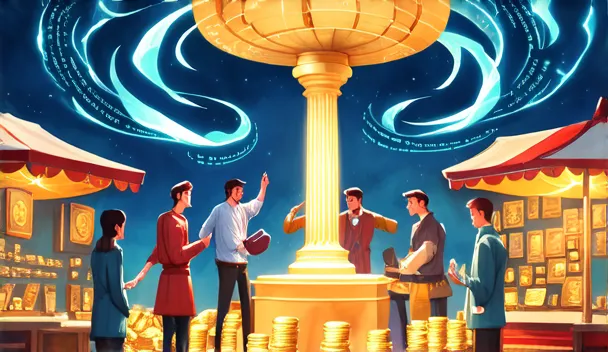
Blockchain technology is poised to revolutionize the collectibles market by introducing decentralized ownership models that redefine the concept of digital property rights.
This new paradigm enables the creation of unique, verifiable, and tradable assets that can be owned and managed with unprecedented security and efficiency. By leveraging blockchain-based smart contracts, collectors can securely buy, sell, and trade rare digital items without intermediaries or centralized authorities.
For instance, platforms like Star Atlas are integrating blockchain mechanics into their grand strategy game, allowing players to own and trade in-game assets and territories that hold real-world value.
This fusion of traditional gaming elements with innovative blockchain technology not only enhances gameplay but also empowers players to have a tangible stake in the game's universe.
Supply Chain Management Revolutionized through Blockchain Technology
The integration of blockchain technology into supply chain management has revolutionized the way businesses operate, offering a more secure, transparent, and efficient method for managing goods and services from production to delivery.
By utilizing a decentralized ledger, companies can track inventory levels, monitor shipments, and verify authenticity with unprecedented accuracy, thereby reducing the risk of counterfeiting and fraud.
This innovative approach also enables real-time communication and collaboration among suppliers, manufacturers, and retailers, streamlining processes and improving overall supply chain visibility.
Decentralized Digital Property Rights in Gaming: New Opportunities for Asset Ownership
The advent of decentralized digital property rights has opened up new avenues for asset ownership in the gaming industry.
One notable example is Star Atlas, a grand strategy game that leverages blockchain technology to integrate traditional gaming elements with innovative blockchain mechanics.
This fusion not only enhances gameplay but also enables a player-driven economy, where every in-game asset and territory holds real-world value, empowering players to have a tangible stake in the game's universe.
Challenges and Opportunities in Decentralized Digital Property Rights: Limitations, Regulation, and Future Directions
Limitations and Challenges in Current Digital Property Rights Systems
Despite the significant progress made in digital property rights, current systems still face several limitations and challenges. One major issue is scalability, as many blockchain platforms struggle to handle a high volume of transactions efficiently.
This can lead to congestion, increased fees, and slower processing times, hindering the widespread adoption of decentralized applications.
Furthermore, regulatory uncertainty and lack of standardization in digital property rights create confusion among users and developers, making it challenging to navigate the legal landscape.
Additionally, security concerns and the risk of smart contract vulnerabilities pose a threat to the integrity of digital assets, emphasizing the need for robust security measures and ongoing development to ensure the reliability of decentralized systems.
Regulatory Frameworks: Shaping the Future of Decentralized Digital Ownership
The evolution of decentralized digital property rights necessitates a corresponding development in regulatory frameworks. As blockchain technology continues to redefine traditional notions of ownership and control, governments and institutions are tasked with creating legislation that acknowledges these innovations while ensuring public protection and transparency.
Regulatory frameworks will play a pivotal role in shaping the future of decentralized digital ownership by providing clarity on issues such as taxation, intellectual property rights, and consumer protection. For instance, clear guidelines on the tax treatment of NFTs could significantly impact their adoption and trading within decentralized ecosystems.
Furthermore, regulatory bodies must navigate the complexities of jurisdictional boundaries in a decentralized world, where transactions can occur seamlessly across geographical borders.
Exploring Future Directions with Blockchain Technology and Solana
The integration of blockchain technology, particularly Solana's innovative architecture, is poised to redefine the landscape of digital property rights. As decentralized networks continue to gain traction, it's becoming increasingly clear that traditional notions of ownership and control are ripe for disruption.
This paradigm shift has far-reaching implications, from gaming platforms like Star Atlas to real estate trading platforms like Parcl.
Blockchain technology is seamlessly integrating into immersive experiences and democratizing access to new markets, as seen in various applications across different industries.
Conclusion
Digital property rights are poised to revolutionize ownership models across various industries, offering unparalleled security, transparency, and interoperability. Through this exploration of blockchain technology and its applications, we've delved into the foundations of digital property, the mechanics of decentralization, and the impact on ownership models and smart contract functionality.
We've also examined real-world use cases, from collectibles to supply chain management, highlighting the vast potential for decentralized digital property rights. As we move forward, it's essential to acknowledge both the limitations and opportunities in this emerging field, including regulatory frameworks that will shape its future.
With blockchain technology continuing to evolve, one thing is clear: decentralized digital property rights are here to stay, transforming the way we think about ownership and control in the digital age.